Modern Web Development Technologies in 2026
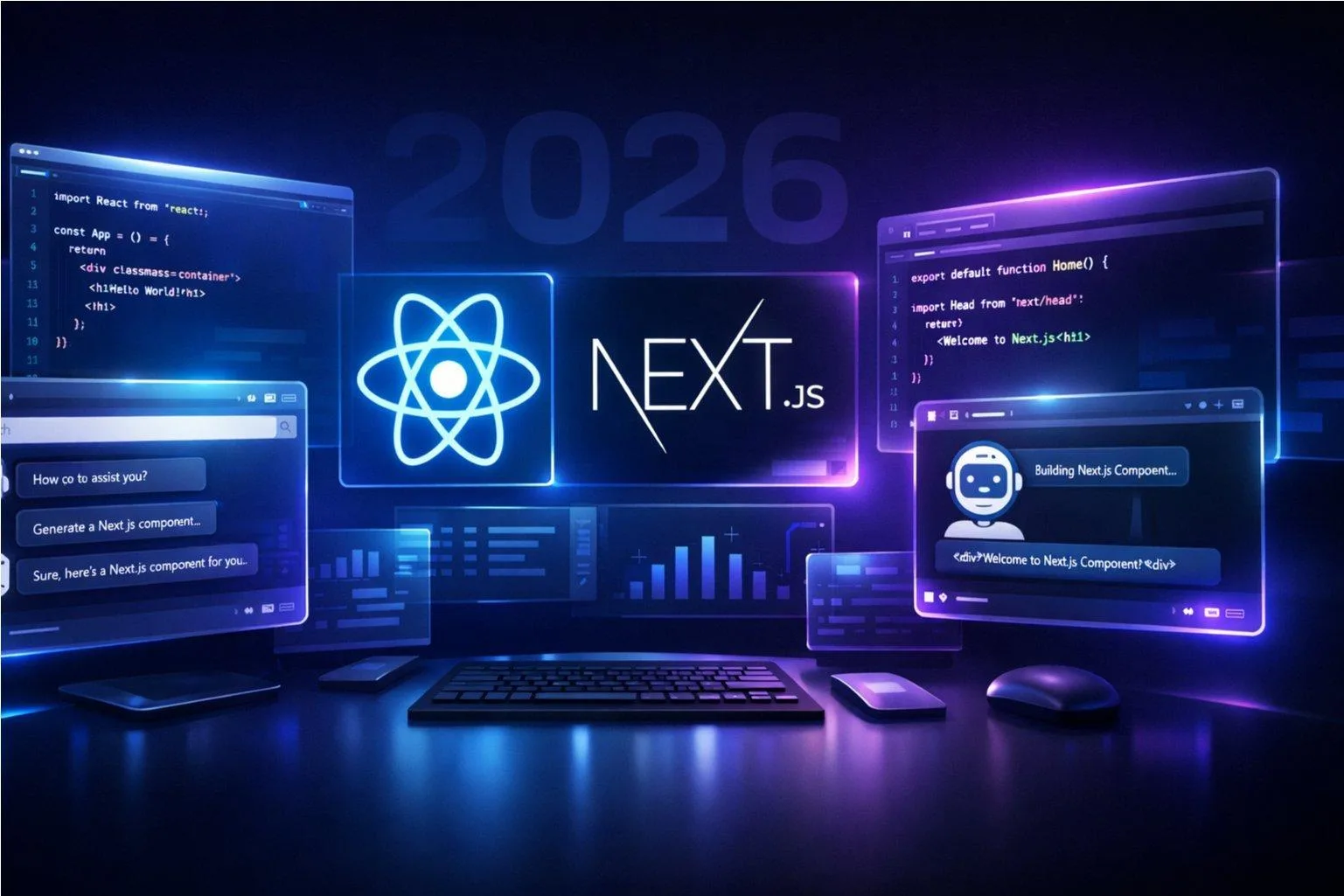
Modern web development combines advanced frameworks, programming tools, AI capabilities, and cloud infrastructure to build scalable digital experiences.
Modern Web Development Technologies in 2026: Frameworks, Tools & Trends
The digital landscape is evolving rapidly, and modern web development technologies are transforming how businesses build, manage, and scale their online platforms. From intelligent AI-powered applications to high-performance frameworks and cloud-native architectures, web development in 2026 is about creating digital experiences that are faster, smarter, more secure, and more adaptable.
Businesses no longer need websites that simply display information. They need interactive web applications that support customers, automate workflows, integrate business systems, and deliver measurable results.
Whether you are a startup planning a digital product, an established company modernizing its infrastructure, or a developer exploring emerging technologies, understanding the modern web development ecosystem is essential.
This guide explores the latest web development technologies in 2026, explains how they work, compares popular frameworks, and helps businesses choose the right technology stack for their projects.
What Are Modern Web Development Technologies?
Modern web development technologies are the programming languages, frameworks, libraries, tools, and infrastructure used to design, build, deploy, and maintain websites and web applications.
These technologies work together across three primary layers:
Frontend development: The visual interface and interactive elements users experience.
Backend development: The server-side logic, business processes, authentication, and application functionality.
Database and infrastructure: The systems responsible for storing information, managing requests, hosting applications, and supporting scalability.
A modern web application may combine HTML, CSS, JavaScript, TypeScript, React, Next.js, Node.js, PostgreSQL, APIs, cloud services, and automated deployment pipelines.
The appropriate combination depends on the application's requirements, expected traffic, security needs, complexity, and long-term maintenance goals.
Why Modern Web Development Technologies Matter in 2026
Technology decisions influence the performance, usability, security, and long-term cost of a digital product.
1. Better website performance
Modern rendering strategies, optimized JavaScript, caching, and content delivery networks help applications load faster and respond more efficiently.
2. Improved user experiences
Responsive layouts, accessible interfaces, interactive components, and smoother navigation create more convenient experiences across devices.
3. Greater scalability
Cloud infrastructure, modular architectures, and efficient databases allow businesses to accommodate growth without unnecessarily rebuilding their applications.
4. Stronger security
Modern development practices incorporate secure authentication, encryption, access controls, dependency management, and continuous security testing.
5. Faster development cycles
Reusable components, automated testing, AI-assisted development, and CI/CD pipelines help teams reduce repetitive work and release improvements more efficiently.
6. Easier business integration
Modern APIs connect web applications with CRM platforms, ERP systems, payment gateways, analytics tools, and other business services.
For organizations planning a tailored digital solution, custom software development can help align the technology architecture with specific operational requirements.
Top Modern Web Development Technologies in 2026
The following technologies represent important areas of the modern web development ecosystem. Their suitability depends on the type of product being developed rather than popularity alone.
1. JavaScript: The Foundation of Interactive Web Development
JavaScript remains one of the most important programming languages for web development. It enables developers to create dynamic interfaces, interactive components, browser-based applications, and server-side functionality.
With technologies such as Node.js, JavaScript can also run outside the browser, allowing developers to use a shared language across frontend and backend development.
Common applications of JavaScript
Interactive website elements
Dynamic content updates
Form validation
Real-time notifications
API communication
Browser-based applications
Server-side application development
JavaScript works with frameworks and libraries such as React, Vue.js, Angular, and Express.js.
2. TypeScript: More Maintainable Application Development
TypeScript extends JavaScript by introducing static typing and additional development tools.
It helps developers identify certain errors during development rather than discovering them only after an application is running.
Why developers use TypeScript
Improved code readability
Better editor support
Easier refactoring
More predictable data structures
Improved collaboration across development teams
Greater maintainability in large projects
TypeScript is especially useful for complex web applications where multiple developers work on shared codebases.
3. React: Component-Based Frontend Development
React is a widely used JavaScript library for developing interactive user interfaces.
It uses reusable components, allowing developers to create consistent interface elements and update them efficiently when application data changes.
React is useful for
Business dashboards
Customer portals
SaaS applications
E-commerce interfaces
Interactive web platforms
Data-driven applications
React can be combined with frameworks such as Next.js to support server rendering, routing, and broader application architecture.
4. Next.js: Full-Stack React Development
Next.js extends React with tools for building production-ready web applications.
It supports multiple rendering approaches, routing, server-side functionality, and performance optimization features.
Key capabilities
Server-side rendering (SSR)
Static site generation (SSG)
Server Components
Application routing
API and server functionality
Image optimization
Performance-focused rendering
Next.js is particularly valuable for applications that require both interactive functionality and search engine discoverability.
Galaxium Coding also identifies Next.js and React within its web application development capabilities.
5. Vue.js: Flexible and Approachable Frontend Development
Vue.js is a progressive JavaScript framework used to build user interfaces and web applications.
Its approachable learning curve and flexible architecture make it suitable for projects of different sizes.
Common use cases
Interactive websites
Administrative dashboards
Single-page applications
E-commerce interfaces
Existing website modernization
Vue can be integrated into an existing application gradually or used as the foundation for a complete frontend.
6. Angular: Structured Enterprise Application Development
Angular is a comprehensive frontend framework maintained by Google.
It provides an organized development structure and built-in capabilities for building complex applications.
Angular is often suitable for
Enterprise applications
Large administrative platforms
Complex business dashboards
Applications with extensive forms
Projects requiring consistent development conventions
Its structured architecture can support large development teams working on sophisticated applications.
7. Node.js: Scalable Server-Side JavaScript
Node.js allows JavaScript to execute on the server, making it possible to develop backend services using the same language as the frontend.
Its event-driven architecture is particularly useful for applications that handle multiple concurrent requests.
Common applications
REST API development
Real-time applications
Messaging platforms
Backend services
Streaming applications
Microservices
Node.js can be used with frameworks such as Express.js and NestJS to organize backend development.
8. Python and Django: Data-Driven Web Applications
Python is widely used in backend development, data processing, and artificial intelligence.
Django provides a structured framework for building secure and maintainable web applications with features such as database management, authentication, and administrative functionality.
Popular use cases
Content management platforms
Business applications
Data-driven websites
Customer management systems
AI-integrated web applications
Internal business portals
Python is particularly valuable when a web application needs to incorporate machine learning or data analytics capabilities.
9. Laravel: Modern PHP Application Development
Laravel is a PHP framework designed to simplify backend application development.
It provides tools for routing, database interactions, authentication, background jobs, and application organization.
Laravel is commonly used for
Business management systems
E-commerce platforms
Customer portals
Content-driven applications
Custom web solutions
Backend APIs
Laravel remains a practical choice for businesses that require flexible backend functionality and maintainable application architecture.
10. Progressive Web Apps (PWAs)
Progressive Web Apps combine web technologies with app-like capabilities.
Depending on browser and device support, they can provide installability, offline functionality, notifications, and improved user experiences without requiring a traditional app-store installation.
Benefits of PWAs
Access through a web browser
Optional installation on supported devices
Offline or low-connectivity functionality
Reduced distribution barriers
Responsive mobile experiences
Shared development across platforms
PWAs can be useful for customer-facing platforms, educational applications, service portals, and businesses seeking broader accessibility.
11. WebAssembly (Wasm)
WebAssembly enables code written in supported languages to execute in web environments with high performance.
It is especially relevant when browser applications require computationally intensive operations.
Potential use cases
Browser-based video and image editing
Interactive 3D applications
Data visualization
Scientific computing
Complex document processing
Performance-intensive business tools
WebAssembly is not necessary for every website. It is most useful when measurable performance requirements justify its additional complexity.
12. AI-Powered Web Development
Artificial intelligence is influencing both how developers build applications and what applications can do.
AI-assisted development tools can support code generation, debugging, testing, documentation, and repetitive development tasks.
AI can also become part of the web application's functionality.
Examples of AI integration
Intelligent customer support chatbots
Personalized recommendations
Natural-language search
Document processing
Predictive analytics
Automated business workflows
AI-powered content assistants
Businesses exploring these capabilities can learn more about AI and machine learning solutions through Galaxium Coding's technology offerings.
AI should be implemented with appropriate data governance, security, testing, and human oversight.

Modern Web Development Frameworks Compared
Selecting a framework requires understanding the project's goals, team expertise, and technical requirements.
Technology | Primary purpose | Suitable projects |
|---|---|---|
React | UI development | Interactive web applications |
Next.js | Full-stack React framework | SEO-focused websites and web apps |
Angular | Structured frontend framework | Enterprise applications |
Vue.js | Flexible frontend development | Interactive websites and dashboards |
Node.js | Server-side JavaScript | APIs and real-time systems |
Django | Python backend framework | Data-driven applications |
Laravel | PHP backend framework | Business applications and platforms |
Astro | Content-focused web framework | Blogs and content-rich websites |
There is no universally best framework. A technology that works well for a content-focused website may not be the best choice for a real-time enterprise application.
Frontend vs. Backend vs. Full-Stack Development
Understanding the differences between development layers helps businesses plan their projects.
Area | Responsibilities | Technologies |
|---|---|---|
Frontend | Interface, navigation, user interactions | HTML, CSS, JavaScript, React |
Backend | Business logic, authentication, APIs | Node.js, Python, Laravel |
Database | Storage, querying, data management | PostgreSQL, MySQL, MongoDB |
Full-stack | Integrating frontend and backend | Next.js, Node.js, databases, APIs |
Frontend development
Frontend development focuses on what users see and interact with. It includes responsive layouts, navigation, visual components, accessibility, and browser performance.
Backend development
Backend development manages application logic, business rules, authentication, data processing, and communication between different services.
Full-stack development
Full-stack development combines frontend and backend expertise to build complete web applications. It is particularly useful when a project requires coordinated development across multiple technical layers.
Emerging Web Development Trends in 2026
Modern web development is increasingly focused on performance, adaptability, intelligent functionality, and maintainability.
1. AI-assisted development workflows
AI coding assistants can help developers generate initial code, identify potential errors, create tests, and document existing systems.
However, AI-generated code still requires technical review, testing, and security validation.
2. Server-first architecture
Server-side rendering and server components can reduce unnecessary client-side JavaScript and improve how content is delivered.
Developers must carefully balance server rendering with client-side interactivity.
3. Edge computing
Edge infrastructure processes selected requests closer to users, potentially reducing latency for supported workloads.
It is useful for certain content delivery, personalization, and geographically distributed applications.
4. API-first development
API-first architecture enables different applications and services to communicate through clearly defined interfaces.
This is important for businesses integrating websites with CRM, ERP, payment, and mobile application systems.
5. Headless architecture
Headless systems separate the frontend presentation layer from backend content or business functionality.
This allows organizations to deliver content across websites, mobile applications, and other digital channels.
6. Accessibility-focused development
Accessible interfaces help people with different abilities use digital products.
Developers should consider semantic HTML, keyboard navigation, readable contrast, meaningful labels, and screen-reader compatibility.
The W3C Web Accessibility Initiative provides authoritative resources for understanding web accessibility standards.
7. Core Web Vitals and user experience
Performance measurement remains essential to delivering useful online experiences.
Google's Core Web Vitals documentation explains key metrics related to loading performance, responsiveness, and visual stability.
8. Cybersecurity by design
Security is increasingly integrated into the entire development lifecycle rather than treated as a final step.
Important practices include:
Secure authentication and authorization
Input validation
HTTPS and appropriate encryption
Dependency vulnerability monitoring
Secure API design
Regular testing and updates
Data privacy and access control
How to Choose the Right Web Development Technology Stack
The best technology stack depends on the business problem rather than the latest industry trend.
Step 1: Define project requirements
Determine whether you need a business website, customer portal, SaaS product, e-commerce platform, or enterprise application.
Step 2: Identify performance requirements
Consider expected traffic, responsiveness, database workloads, and whether real-time functionality is necessary.
Step 3: Evaluate development expertise
Choose technologies your team can develop, maintain, and support effectively.
Step 4: Consider integration requirements
Identify connections with payment systems, CRM, ERP, analytics, third-party APIs, and existing infrastructure.
Step 5: Plan security and scalability
Establish requirements for authentication, data protection, hosting, backups, and future growth.
Step 6: Evaluate long-term maintenance
Consider documentation, community support, upgrade requirements, and the availability of skilled developers.
Example Technology Stacks
Project type | Potential stack |
|---|---|
Corporate website | Next.js, TypeScript, headless CMS |
SaaS application | React, Next.js, Node.js, PostgreSQL |
Enterprise portal | Angular or React, .NET or Node.js |
AI-powered platform | React, Python, AI APIs, PostgreSQL |
E-commerce platform | Next.js, APIs, payment integrations |
Content-rich blog | Astro or Next.js, CMS |
These are illustrative options rather than universal recommendations. Architecture should be finalized after technical requirements are assessed.
Web Development Technologies for Businesses in Qatar
Businesses in Qatar are increasingly exploring digital platforms to improve customer experiences, streamline operations, and support business growth.
Choosing modern web technologies can help organizations develop digital products aligned with their operational requirements.
Industry-specific applications
Healthcare: Appointment booking, patient portals, healthcare administration, and secure information management.
Finance: Customer dashboards, financial reporting, secure transaction interfaces, and account management.
Retail and e-commerce: Online stores, inventory integration, order management, and digital payment experiences.
Education: Learning management systems, student portals, digital enrollment, and online assessment platforms.
Real estate: Property listing platforms, lead management, virtual property experiences, and customer portals.
Important considerations for Qatar-based businesses
When developing digital platforms for the Qatar market, organizations should consider:
Arabic and English language support where required
Mobile-first usability
Local customer expectations
Payment gateway compatibility
Data privacy and security requirements
Integration with existing business systems
Reliable hosting and ongoing technical support
A technology stack should support actual business requirements instead of being selected solely because it is popular.
Common Mistakes When Choosing Web Development Technologies
Choosing technology based only on popularity
A trending framework may not match the project's needs. Evaluate practical requirements and long-term support.
Overcomplicating the architecture
Using microservices, multiple frameworks, and unnecessary integrations can increase development and maintenance costs.
Ignoring performance from the beginning
Performance should be considered during architecture and development, not only after launch.
Treating security as an afterthought
Authentication, authorization, data protection, and secure coding must be planned early.
Neglecting mobile responsiveness
A website should function effectively across mobile phones, tablets, laptops, and different screen sizes.
Overlooking maintenance
Web applications require updates, monitoring, bug fixes, security patches, and ongoing improvements.
The Future of Modern Web Development
The future of web development will likely involve greater integration between AI, cloud infrastructure, intelligent interfaces, and high-performance browser capabilities.
Developers will continue to focus on building applications that are easier to maintain, faster to access, more accessible, and more responsive to business needs.
The most valuable approach is not adopting every emerging technology. It is selecting tools that solve real problems while creating a reliable foundation for future improvements.
Conclusion
Modern web development technologies in 2026 offer businesses and developers more opportunities to create powerful digital experiences than ever before.
JavaScript, TypeScript, React, Next.js, Node.js, Python, cloud infrastructure, APIs, and AI capabilities each contribute to different aspects of modern web development.
The right technology stack depends on project complexity, performance requirements, security, scalability, and long-term business objectives.
For organizations planning a new website or digital platform, a thoughtful technology strategy can make the difference between a product that simply launches and one that continues delivering value as the business grows.
Businesses exploring their next digital project can connect with Galaxium Coding to discuss their requirements and potential development approaches.
Frequently Asked Questions
What are the most popular web development technologies in 2026?
JavaScript, TypeScript, React, Next.js, Node.js, Angular, Vue.js, Python, and cloud technologies are widely used across different types of web projects.
Which web development framework is best in 2026?
There is no single best framework. React and Next.js are suitable for many interactive and SEO-focused applications, while Angular, Vue.js, Django, and Laravel serve different project requirements.
Is JavaScript still relevant in 2026?
Yes. JavaScript remains a core web technology for interactive frontend development and server-side applications through Node.js.
Why is TypeScript important for modern web development?
TypeScript introduces static typing and development tools that can improve code quality, maintainability, and collaboration in larger projects.
What is the difference between React and Next.js?
React is a library for building user interfaces. Next.js is a framework built around React that provides additional capabilities such as routing, rendering strategies, and application-level features.
How is AI changing web development?
AI supports code generation, testing, debugging, documentation, and intelligent application features such as chatbots, recommendations, and automated workflows.
What technologies are used to build scalable web applications?
Scalable applications may use frameworks such as Next.js, backend technologies such as Node.js or Python, databases such as PostgreSQL, APIs, caching, and cloud infrastructure.
Are Progressive Web Apps still useful?
Yes. PWAs can provide installable, responsive, and app-like experiences through web technologies, depending on browser and device support.
How much does modern web application development cost?
Costs vary depending on functionality, design complexity, integrations, security requirements, development time, and ongoing maintenance. A simple website and a complex enterprise platform have very different budgets.
How can businesses choose a web development company?
Evaluate technical expertise, relevant experience, communication, project planning, security practices, maintenance capabilities, and the ability to understand your business requirements.
Ready to build a modern digital platform?
Explore Galaxium Coding's software development capabilities or contact our team to discuss your web development requirements.