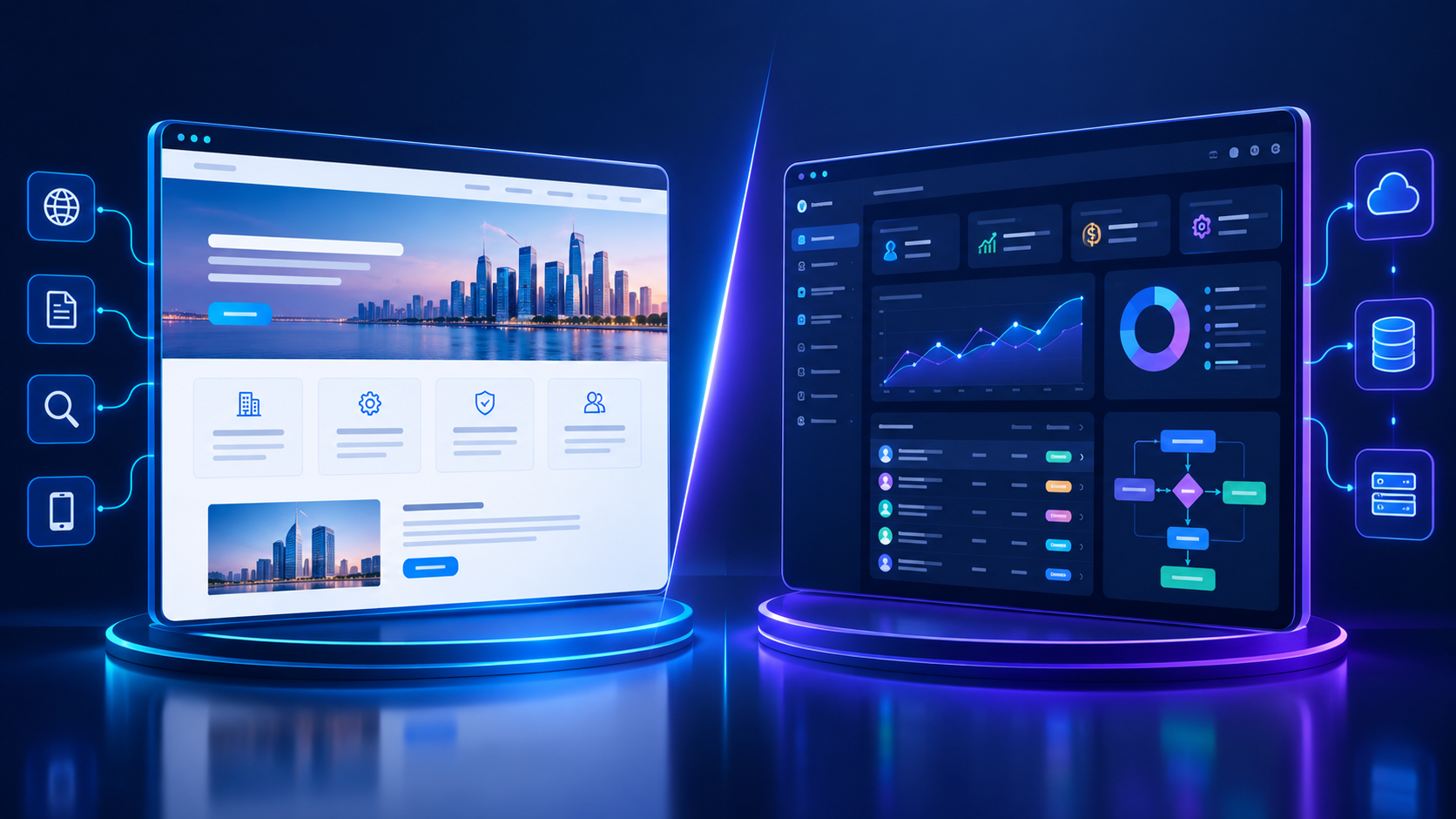
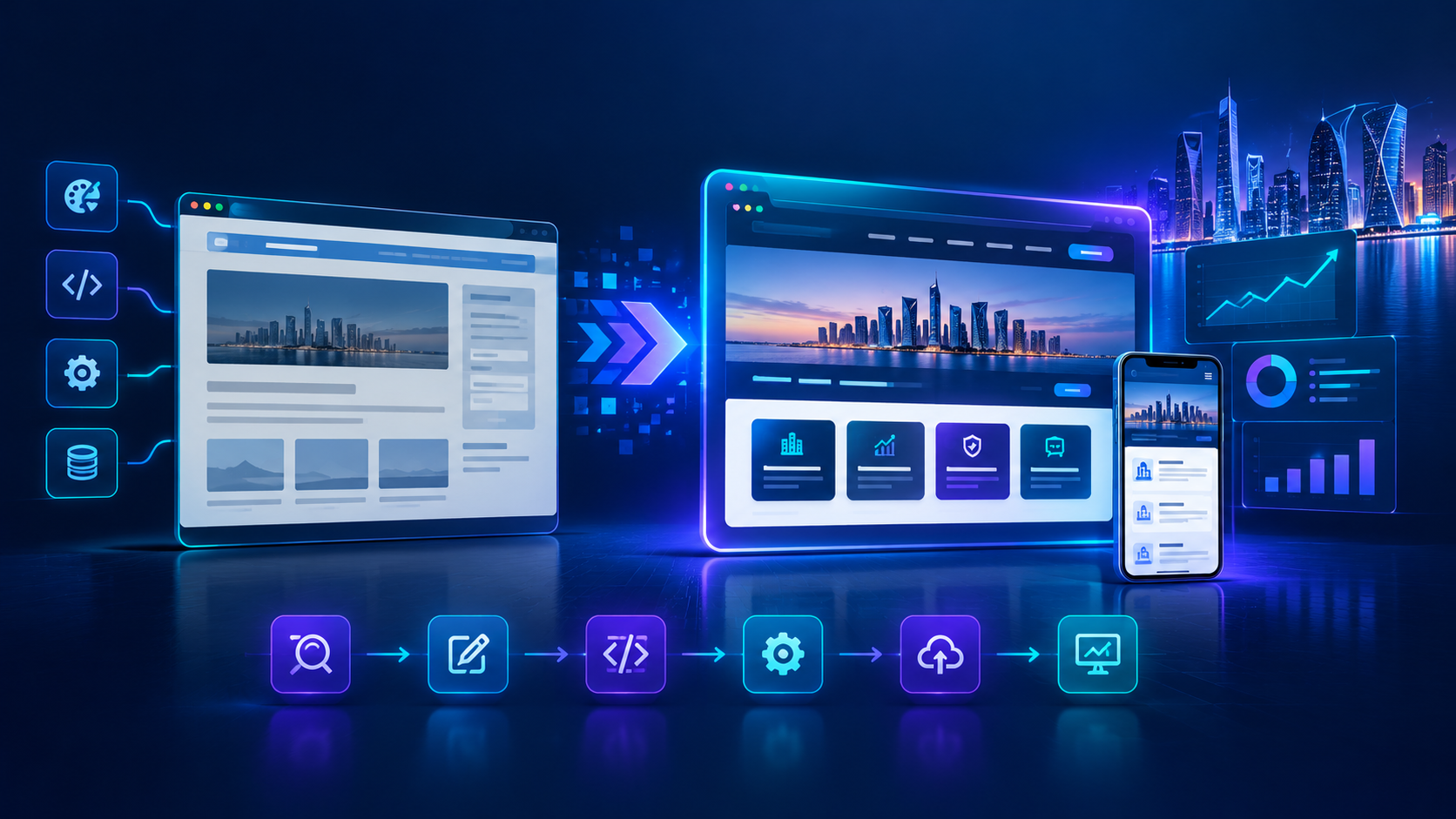
Why Your Business Needs a Professional Website Development

A professional website helps Qatar businesses strengthen their digital presence, improve customer experience, and support business growth.
Why Your Business Needs a Professional Website Development Company in Qatar
In Qatar's increasingly digital business environment, having a professional website is no longer optional for companies that want to remain competitive. Customers search online to discover businesses, compare services, evaluate credibility, and make purchasing decisions. If your company does not have a strong digital presence, you may be missing valuable opportunities to connect with potential customers.
However, creating a successful business website involves much more than selecting a template and adding a few pages. A well-developed website needs thoughtful design, reliable technology, user-friendly navigation, search engine optimization (SEO), security, and functionality that supports your business objectives.
Working with a professional website development company in Qatar can help businesses transform their online presence into a practical digital asset. Whether you operate a startup, retail business, real estate company, healthcare organization, or established enterprise, the right development partner can build a website that reflects your brand and supports your long-term growth.
In this guide, we explore why professional website development matters, which features businesses should prioritize, how to choose a development partner, and what to consider before investing in a new website.
What Does a Professional Website Development Company in Qatar Do?
A professional website development company helps businesses plan, design, develop, launch, and maintain digital platforms according to their specific requirements.
Unlike basic website builders that rely primarily on predefined templates, professional development services can provide customized functionality, integrations, and user experiences.
Typical services include:
Website strategy and consultation
UI/UX design and prototyping
Front-end and back-end development
Corporate website development
E-commerce website development
Custom web application development
Content management systems (CMS)
Search engine optimization implementation
Mobile-responsive development
API and third-party integrations
Website security and performance optimization
Hosting, deployment, and maintenance
For example, a small consulting company may need a professional website with service pages, enquiry forms, and appointment booking. A growing retail business may require product catalogues, payment integration, inventory management, and order tracking.
The development approach should depend on the business's needs rather than forcing every company to use the same solution.
Businesses exploring tailored digital platforms can learn more about custom software development services and how technology can be designed around specific operational requirements.
1. Build a Professional and Credible Brand Image
Your website is often one of the first places potential customers encounter your business.
Before contacting your company, visitors may want to understand:
What products or services do you offer?
Is your business legitimate and professional?
Do you have relevant experience?
Can your company meet their requirements?
How can they contact you?
An outdated, confusing, or poorly designed website can create unnecessary doubt. On the other hand, a well-structured website communicates professionalism and makes it easier for visitors to understand your business.
Why first impressions matter
A professional website helps create a consistent brand experience through:
Clear messaging
Consistent brand colours and typography
High-quality visuals
Logical page layouts
Easy-to-find contact information
Relevant service descriptions
Professional mobile presentation
Consider a customer searching for an accounting firm in Doha. They visit two websites.
The first website has outdated information, broken links, and no clear service descriptions.
The second provides detailed services, professional branding, client enquiry options, and useful information.
Even without knowing either company personally, the visitor may feel more confident exploring the second business.
A professional website does not automatically guarantee trust, but it gives businesses a stronger foundation for establishing it.
2. Improve Your Online Visibility Through SEO
A website is valuable only when the right audience can discover it.
Search engine optimization helps businesses improve the accessibility, relevance, and structure of their website so search engines can understand its content and users can find useful information.
Professional website development and SEO should work together from the beginning.
Essential SEO elements during development
SEO element | Why it matters |
|---|---|
SEO-friendly URLs | Makes page addresses understandable |
Title tags | Communicate the topic of each page |
Meta descriptions | Summarize pages in search results |
Heading structure | Organizes content logically |
Mobile responsiveness | Supports usability on different devices |
Page speed | Improves the experience for visitors |
Image optimization | Helps reduce unnecessary loading time |
Internal linking | Connects relevant pages across the website |
XML sitemap | Helps search engines discover important URLs |
Canonical tags | Clarify preferred page versions |
Structured data | Provides eligible search engines with additional context |
For example, a Qatar-based company offering business software should not rely on a homepage alone to explain every service.
Dedicated pages for web development, mobile applications, business automation, and software solutions allow the company to address different customer needs more clearly.
Businesses can explore web application development services when they need more advanced functionality than a conventional corporate website provides.
SEO is a long-term investment
Professional development creates a stronger technical foundation, but it does not guarantee first-page rankings.
Search visibility also depends on content quality, competition, relevance, website authority, and ongoing optimization.
A reliable development company should explain what SEO-related work is included in the project and what may require a separate ongoing strategy.
3. Deliver a Better Mobile User Experience
Customers may discover your business through smartphones, tablets, laptops, and desktop computers.
A website that looks impressive on a large screen but becomes difficult to use on a mobile device can lose potential enquiries.
What mobile-responsive development includes
A professionally developed responsive website should provide:
Flexible layouts that adapt to screen sizes
Readable text without unnecessary zooming
Touch-friendly buttons and navigation
Properly sized images
Mobile-friendly forms
Consistent functionality across devices
Fast and efficient loading
Accessible menus and interactive elements
Why mobile experience matters for Qatar businesses
Customers may search for services while travelling, shopping, working, or comparing providers.
For instance, someone looking for a maintenance company may want to call immediately. If the telephone number is difficult to find or the website does not work properly on mobile, the visitor may leave.
A mobile-first approach helps businesses make essential information and actions accessible wherever customers browse.
4. Generate More Qualified Leads and Business Enquiries
A business website should do more than display information. It should guide visitors toward meaningful actions.
Depending on your business model, these actions may include:
Requesting a quotation
Booking a consultation
Calling your business
Sending an enquiry
Scheduling an appointment
Downloading a brochure
Registering for a service
Purchasing a product
Conversion-focused website design
A professional development company can help organize the website around your customer journey.
For example, a corporate services website may include:
A homepage explaining the main value proposition.
Service pages addressing individual customer needs.
Case studies or project examples where available.
Frequently asked questions that address common concerns.
Clear calls to action.
A simple enquiry form.
Contact information that is easy to access.
Example: A real estate business in Qatar
A property company may benefit from a website with:
Property listings
Search and filtering
Property details
Location information
Enquiry forms
Agent contact details
Lead management integration
Instead of relying exclusively on social media enquiries, the company can create a structured digital channel for presenting properties and receiving customer requests.
The right website functionality depends on the company's sales process and customer expectations.
5. Customize Your Website Around Your Business Requirements
Every business operates differently. A generic template may be sufficient for a basic online presence, but more complex business requirements often call for customized development.
Custom website development vs. template-based websites
Feature | Template-based website | Custom website development |
|---|---|---|
Initial setup | Usually faster | Requires planning and development |
Design | Based on predefined layouts | Tailored to brand and requirements |
Functionality | Limited to available features and extensions | Can support specific workflows |
Integrations | Depends on platform and plugins | Can be designed around required systems |
Scalability | Depends on platform architecture | Can be planned around expected growth |
Maintenance | Platform and plugin updates may be needed | Requires a defined maintenance approach |
Cost | Often lower for simpler requirements | Varies with complexity and scope |
Neither approach is automatically better for every company.
A small business with a few service pages may not need a highly customized platform. A company requiring customer accounts, dashboards, complex workflows, or multiple integrations may benefit from custom development.
The key is selecting a solution that fits your business today while considering realistic future requirements.
6. Integrate Your Website With Essential Business Systems
Many companies already use digital tools to manage customer relationships, sales, finance, inventory, and operations.
A professionally developed website can connect with these systems where suitable integrations are available.
Common website integrations
Integration | Business purpose |
|---|---|
CRM | Organize customer information and sales leads |
ERP | Connect relevant operational processes |
Payment gateway | Accept online payments |
Booking system | Schedule appointments and reservations |
Email marketing | Manage newsletters and campaigns |
Analytics | Understand website interactions |
Inventory system | Synchronize stock information |
Customer support | Manage enquiries and service requests |
Third-party APIs | Exchange data with external platforms |
Example: An e-commerce business
Imagine a business selling products online.
When a customer completes a purchase, the website may need to:
Process the order.
Confirm the payment.
Update inventory.
Send an order confirmation.
Notify the fulfilment team.
Record the transaction in relevant business systems.
Provide the customer with order updates.
Without appropriate integration, employees may need to perform some of these steps manually.
Professional development can help reduce repetitive tasks and improve consistency by connecting the website with the systems that support business operations.
For companies looking to build connected digital platforms, custom software solutions can support broader integration and automation requirements.
7. Strengthen Website Security and Protect Customer Information
Website security is essential for businesses that collect enquiries, customer details, account information, or payments.
Security should be considered throughout the development process rather than added only after launch.
Important website security practices
A development project may include:
HTTPS and SSL/TLS configuration
Secure authentication and authorization
Appropriate password protection
Input validation and output encoding
Protection against common web vulnerabilities
Secure handling of forms and customer information
Access controls for administrative accounts
Regular software and dependency updates
Reliable backups and recovery procedures
Monitoring and incident response planning
Businesses should also understand what personal information they collect, why it is collected, how it is used, and how it is protected.
For relevant projects, review Qatar's Personal Data Privacy Protection Law and obtain appropriate legal guidance about compliance obligations.
Security is an ongoing responsibility
Launching a website is not the end of security management.
Regular maintenance, monitoring, updates, and appropriate technical controls help address risks as the website and its dependencies evolve.
A development partner should clearly explain which security measures are included and what responsibilities remain with the business.
8. Support Arabic and English Website Experiences
For many organizations operating in Qatar, bilingual website support can be an important consideration.
A bilingual website allows businesses to communicate with different audiences in Arabic and English while maintaining a consistent brand experience.
What professional bilingual development involves
A properly implemented bilingual website may require:
Arabic and English content
Right-to-left (RTL) and left-to-right (LTR) layouts
Language selection
Appropriate Arabic typography
Correct text alignment
Navigation and form adjustments
Translated metadata
Language-specific SEO considerations
Testing across mobile and desktop devices
Simply translating the words without adapting the interface may create usability problems.
For example, Arabic navigation, icons, menus, and content alignment may need to be adjusted to provide a natural reading experience.
Businesses should decide early whether they need bilingual functionality because it can influence design, content management, testing, and project scope.
9. Create a Website That Can Scale With Your Business
Business requirements change over time.
A startup may initially need a simple website with service information and contact details. As it grows, it may require customer accounts, online payments, booking systems, dashboards, or additional integrations.
Professional website development can help businesses plan for these changes without building unnecessary functionality from day one.
Scalable website features
Depending on the project, scalability planning may involve:
Modular architecture
Efficient database design
Cloud hosting
Content management flexibility
API-based integrations
Performance monitoring
Caching and optimization
Automated deployment processes
Reliable backup strategies
A practical growth example
A service company could develop its digital platform in stages:
Stage | Digital capability |
|---|---|
Initial launch | Corporate website and enquiry forms |
Growth | SEO landing pages and content management |
Customer management | CRM integration and lead tracking |
Operational improvement | Booking and workflow automation |
Advanced digital services | Customer portal or mobile application |
This phased approach allows the company to prioritize essential functionality while maintaining a roadmap for future development.
For businesses planning a wider digital ecosystem, mobile application development can complement an existing website when customers or employees need dedicated mobile experiences.
10. Improve Website Performance and Loading Speed
Website performance affects how visitors experience your business.
A slow website can frustrate users, interrupt navigation, and make it harder for potential customers to complete actions.
Factors that influence performance
Image size and format
JavaScript and CSS optimization
Server response time
Hosting infrastructure
Caching configuration
Database performance
Third-party scripts
Page complexity
Content delivery network configuration
A professional development team should test performance during development and after deployment.
How performance can be evaluated
Businesses can use tools such as Google PageSpeed Insights to evaluate performance and identify possible improvements.
Useful measurements include Core Web Vitals:
Metric | What it measures |
|---|---|
Largest Contentful Paint (LCP) | Loading performance |
Interaction to Next Paint (INP) | Responsiveness to interactions |
Cumulative Layout Shift (CLS) | Visual stability |
These metrics help developers identify specific usability and performance problems.
The objective is not simply to achieve a perfect score in every automated test. It is to build a website that performs well for real visitors under realistic conditions.
11. Understand Website Development Costs in Qatar
The cost of professional website development in Qatar depends on the scope, functionality, technology, and complexity of the project.
There is no single price that applies to every business.
Factors that influence website development costs
Cost factor | Description |
|---|---|
Number of pages | More pages may require additional design and content work |
Design complexity | Custom interfaces require more planning |
Functionality | Booking, dashboards, accounts, and interactive features add scope |
E-commerce | Products, payments, orders, and inventory introduce complexity |
Integrations | External systems require compatibility and testing |
Content | Writing, translation, and content migration affect scope |
SEO | Technical implementation and content optimization require planning |
Security | Security requirements depend on data and functionality |
Hosting | Infrastructure requirements vary by website |
Maintenance | Ongoing support and updates may involve recurring costs |
What should a professional quotation include?
Before approving a proposal, ask for clarity on:
Project scope and deliverables
Number of pages and templates
Design and revision process
Included functionality
Content writing and translation
SEO deliverables
Hosting and domain expenses
Third-party software costs
Testing and quality assurance
Launch and deployment
Maintenance and support
Ownership and handover
For a more detailed breakdown, read how much it costs to build a website in Qatar in 2026.
A transparent quotation helps businesses compare proposals based on actual deliverables rather than price alone.
12. Why Qatar Businesses Should Consider Local Market Requirements
Working with a development company that understands Qatar's business environment can help with practical project considerations.
Local business communication
Your website should clearly explain your services, business location, contact channels, and the process for engaging with your company.
Arabic and English support
Depending on your audience, bilingual content and navigation may improve accessibility.
Industry-specific requirements
Different industries may require different website functionality.
Industry | Potential website features |
|---|---|
Real estate | Listings, filters, maps, enquiry forms |
Healthcare | Service information, appointment requests |
Education | Admissions information, applications, portals |
Retail | Product catalogue, shopping cart, payments |
Hospitality | Reservations, service details, booking systems |
Construction | Project portfolios, quotation requests |
Professional services | Consultation booking, service pages |
E-commerce considerations
Businesses planning to sell online should investigate applicable licensing, commercial, payment, and consumer-facing requirements before launch.
Qatar's Ministry of Commerce and Industry provides official business information and services. Requirements depend on the nature of the business and its activities, so businesses should verify the applicable rules rather than rely on assumptions.
Local context should influence the project where it is relevant, but the website's design and functionality should ultimately reflect the target customers and business objectives.
13. How to Choose the Right Website Development Company in Qatar
Selecting a development partner is an important decision because the website may become a long-term business asset.
Instead of evaluating companies only by their promotional claims, examine their approach, communication, technical capabilities, and project deliverables.
1. Review the portfolio
Look for completed projects and, where possible, visit the actual websites.
Consider:
Design quality
Mobile experience
Loading speed
Navigation
Relevant functionality
Industry experience
You can review Galaxium Coding's projects and portfolio to explore its digital work.
2. Understand the development process
Ask how the company manages each stage:
Discovery and requirements
Planning and architecture
UI/UX design
Development
Testing
Deployment
Maintenance
A clear process reduces confusion about responsibilities and expectations.
3. Ask about the technology stack
The development company should explain why its recommended technologies are appropriate for your project.
Technology should support your objectives, not unnecessarily complicate the solution.
4. Discuss SEO from the beginning
Ask whether technical SEO is included and how the team handles:
Page structure
Metadata
URLs
Mobile usability
Redirects
Indexing requirements
Performance
5. Clarify ownership and access
Confirm who will own or control:
Domain name
Hosting account
Website source code
Design files
Content and media
Third-party subscriptions
Administrative credentials
Ownership and handover arrangements should be documented clearly.
6. Evaluate communication
A good development partner should be able to explain technical decisions in language you understand.
You should know what is being built, why it is needed, what it costs, and how progress will be measured.
7. Confirm post-launch support
Ask what happens after the website goes live.
Clarify whether support includes bug fixes, updates, monitoring, backups, training, or additional development—and whether these services involve separate fees.
14. Why Choose Galaxium Coding for Website Development?
Galaxium Coding is a technology and software development company serving businesses that need professional digital solutions.
Our approach to development focuses on understanding business requirements and building technology around practical objectives.
Depending on project needs, our capabilities include:
Custom website development
Web application development
Custom software solutions
Mobile application development
AI integration
Business automation
API integrations
Cloud and DevOps solutions
Enterprise digital platforms
We aim to help businesses move beyond a basic online presence toward digital experiences that support customer engagement, business operations, and future development.
Explore Galaxium Coding's website to learn more about our technology capabilities and approach.
Our website development approach
A professional project typically begins by understanding:
Business objectives: What should the website achieve?
Target audience: Who will use it, and what information do they need?
Requirements: Which features and integrations are essential?
Design: How should the website communicate the brand and guide users?
Development: Which architecture and technologies are appropriate?
Testing: Does the website function correctly across devices and scenarios?
Launch: Is the website ready for deployment?
Support: How will the website be maintained and improved?
This structured approach helps connect development decisions with business priorities.
15. Common Mistakes to Avoid When Developing a Business Website
Businesses can avoid unnecessary costs and complications by planning carefully.
Choosing a provider based only on price
A lower quotation may exclude essential services such as content, SEO, testing, or maintenance.
Compare scope and deliverables before making a decision.
Ignoring mobile users
A website that works only on desktop devices creates unnecessary barriers for visitors.
Mobile usability should be part of the initial design and testing process.
Treating SEO as an afterthought
Adding SEO only after development may require changes to content, URLs, page structure, or technical implementation.
Plan SEO requirements early.
Adding too many unnecessary features
Complexity does not automatically improve a website.
Prioritize functionality that supports real user needs and business objectives.
Neglecting security and maintenance
Websites require ongoing attention to updates, security, backups, and performance.
Define a maintenance plan before launch.
Failing to plan for content
Design and development depend on clear content requirements.
Plan who will prepare, review, translate, and update website content.
Not defining project ownership
Ensure that access, ownership, documentation, and handover expectations are clear before the project begins.
16. The Future of Professional Website Development in Qatar
Business websites are increasingly becoming connected digital platforms rather than standalone online brochures.
Several developments are influencing how companies plan their digital presence.
AI-powered customer experiences
Businesses may integrate AI assistants to help visitors find information, answer common questions, or navigate services.
AI features should be introduced where they provide genuine value and where their limitations and data-handling requirements are understood.
Greater business automation
Websites can connect with internal systems to automate selected workflows, including enquiries, booking confirmations, notifications, and customer management.
Cloud-based platforms
Cloud infrastructure can support deployment, monitoring, storage, and scaling according to business requirements.
More personalized digital experiences
Businesses may use relevant customer information and preferences to improve navigation, recommendations, and service experiences, subject to appropriate privacy practices.
Connected digital ecosystems
A website may eventually become part of a wider ecosystem connecting:
Website → CRM → Mobile Application → Payments → Business Software → Analytics → Automation
This development makes early planning important. Businesses do not need to implement everything immediately, but they should understand how future requirements may affect the initial architecture.
Conclusion
A professional website is more than a digital presence. It can support credibility, customer communication, search visibility, lead generation, online sales, and business operations.
For businesses in Qatar, choosing the right website development company means finding a partner that understands both technology and business objectives.
The most effective website projects begin with clear requirements, prioritize user experience, consider SEO and security from the start, and provide a practical foundation for future growth.
Whether your business needs a corporate website, an e-commerce platform, a custom web application, or a connected digital solution, professional development can help turn your objectives into a functional and sustainable online experience.
Build a Professional Website With Galaxium Coding
If you are planning a new website or upgrading your existing digital presence, Galaxium Coding can help you explore a solution aligned with your business needs.
Contact Galaxium Coding to discuss your website development requirements and take the next step toward building your digital presence.
Frequently Asked Questions (FAQs)
1. Why should a business hire a professional website development company in Qatar?
A professional company can help plan, design, and develop a website that reflects your brand, supports customer needs, incorporates relevant SEO practices, and provides functionality suited to your business objectives.
2. How much does professional website development cost in Qatar?
The cost depends on the website's size, design, functionality, integrations, content, SEO requirements, and ongoing support. Request a detailed quotation based on your specific requirements.
3. How long does it take to develop a business website?
A simple website may take less time than a complex corporate platform or custom web application. The timeline depends on project scope, content readiness, design approvals, functionality, testing, and integrations.
4. Is SEO included in professional website development?
Some development packages include foundational technical SEO, while others offer SEO as a separate service. Confirm whether metadata, heading structure, mobile responsiveness, performance optimization, and indexing-related requirements are included.
5. Can a website support Arabic and English?
Yes. A professionally developed bilingual website can support Arabic and English content, RTL and LTR layouts, language navigation, and language-specific SEO requirements.
6. What is the difference between website development and web application development?
Website development often focuses on presenting information, services, and content. Web application development typically involves interactive functionality such as user accounts, dashboards, databases, workflows, and personalized features. Some business websites include both.
7. Can a business website integrate with CRM or ERP software?
Yes, depending on the systems involved and the availability of suitable APIs or integration methods. Integrations can help synchronize information, manage enquiries, and support selected business workflows.
8. Why is mobile-responsive website development important?
Responsive development allows a website to adapt to different screen sizes and devices. It helps visitors navigate, read content, complete forms, and interact with your business more easily.
9. Does a professional website need ongoing maintenance?
Yes. Maintenance may include security updates, backups, performance monitoring, bug fixes, compatibility checks, and content updates. The specific requirements depend on the website's technology and functionality.
10. How do I choose the best website development company in Qatar?
Review its portfolio, technical expertise, development process, SEO approach, communication, project scope, ownership terms, and post-launch support. Compare providers based on the value and deliverables they offer rather than price alone.