How Much Does a Booking App Cost to Build? Complete Cost Guide for 2026
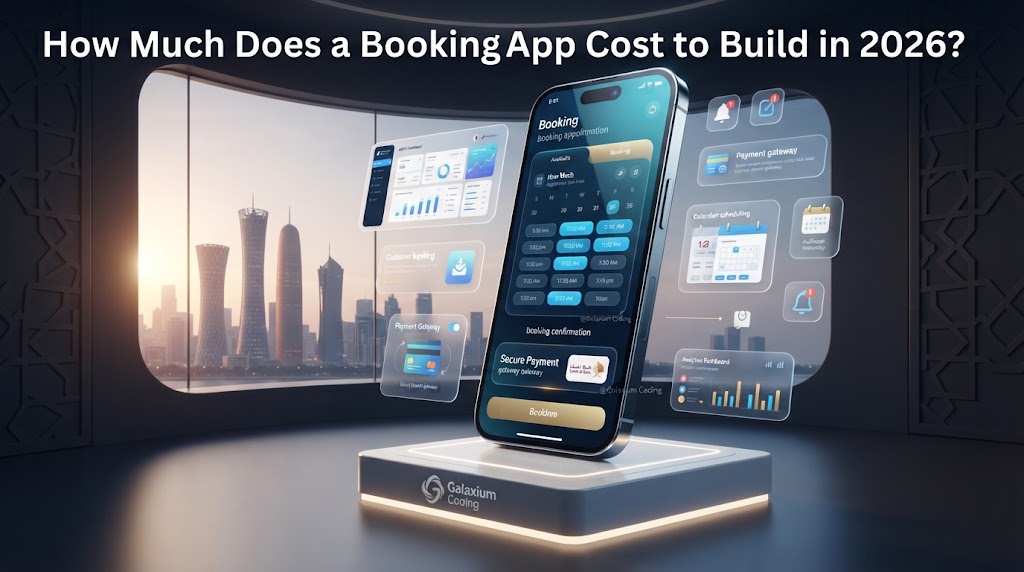
A booking app can combine appointment scheduling, payments, notifications, customer accounts and business management into one connected digital platform.
How Much Does a Booking App Cost to Build in 2026?
A booking app can transform how customers schedule appointments, reserve services, book rooms, arrange consultations, reserve tables, schedule home services, or manage recurring appointments.
But before starting development, one question usually comes first:
How much does a booking app cost to build?
There is no single fixed price.
A simple appointment booking application with customer registration, availability, booking and an admin dashboard is very different from a full marketplace with multiple service providers, online payments, real-time availability, GPS tracking, notifications, customer reviews, staff management, Arabic and English support, and advanced analytics.
For businesses in Qatar, current published app-development estimates vary considerably depending on scope. Some 2026 Qatar-focused estimates place basic applications around QAR 20,000–50,000, while mid-complexity applications can reach QAR 50,000–150,000 or more. Other market estimates place professional cross-platform and enterprise applications substantially higher. These figures should therefore be treated as budgeting benchmarks rather than fixed quotations.
This guide explains what determines the cost of a booking app, what features you may need, how much different types of booking applications can cost, and how businesses can plan an MVP before investing in advanced functionality.
Businesses considering a custom digital product can also explore custom software development services from Galaxium Coding.
What Is a Booking App?
A booking app is a digital platform that allows customers to check availability and reserve a product, service, appointment, space, or time slot.
Depending on the business model, a booking application may allow users to:
Create an account
Search for services
View available dates and times
Select a provider or staff member
Make a booking
Pay online
Cancel or reschedule
Receive reminders
View booking history
Contact the business
Leave reviews
Receive promotional notifications
Behind the customer-facing application, businesses usually need an administration system.
The admin system may allow staff to:
Manage customers
Manage services
Create availability
Block unavailable dates
Manage staff schedules
Confirm or cancel bookings
Manage payments
Issue refunds
View reports
Send notifications
Manage promotions
Track customer activity
This is why the cost of a booking app depends on more than the mobile interface.
The complete system may include a mobile application, backend, database, APIs, payment infrastructure, admin dashboard and cloud environment.
How Much Does a Booking App Cost in Qatar?
A practical starting point is to divide booking applications into three broad levels.
Booking App Type | Approximate Development Budget | Typical Scope |
|---|---|---|
Basic Booking MVP | QAR 20,000–50,000+ | Login, services, availability, booking, basic admin |
Mid-Level Booking App | QAR 50,000–150,000+ | Payments, notifications, multiple roles, dashboard, APIs |
Advanced Booking Platform | QAR 150,000–300,000+ | Marketplace, real-time scheduling, GPS, advanced integrations, analytics |
Enterprise Booking Ecosystem | QAR 300,000+ | Multiple applications, complex integrations, advanced security, AI and enterprise infrastructure |
These are directional budgeting ranges, not fixed market prices. Published Qatar app-development estimates differ significantly because companies define "basic," "mid-level," and "advanced" differently. For example, one 2026 Qatar pricing guide places basic applications around QAR 20,000–50,000 and medium applications around QAR 50,000–150,000, while other published estimates place professional cross-platform applications and enterprise systems considerably higher.
The actual quotation for your project depends on the requirements.
What Determines the Cost of a Booking App?
The most important factors include:
Number of platforms
Number of user types
UI/UX complexity
Booking logic
Calendar and availability management
Payment integration
Admin dashboard
Backend development
Third-party APIs
Push notifications
GPS and location features
Real-time functionality
Arabic and English support
Security requirements
Analytics
AI features
Testing
Deployment
Maintenance
A booking app with one customer type and one business may be relatively straightforward.
A marketplace where hundreds of businesses manage their own schedules is much more complex.
Booking App Cost by Complexity
1. Basic Booking App: QAR 20,000–50,000+
A basic booking application is designed around one straightforward booking workflow.
For example, imagine a small salon.
Customers can:
Register
View services
Select a date
Select a time
Book an appointment
Receive confirmation
The business can:
Add services
Set availability
View appointments
Cancel appointments
Manage customers
A basic version may not require sophisticated payment processing, GPS, real-time chat or multiple provider accounts.
This makes it suitable for an MVP.
2. Mid-Level Booking App: QAR 50,000–150,000+
A mid-level booking platform may include:
Android and iOS
Customer accounts
Staff accounts
Admin dashboard
Online payments
Push notifications
Booking reminders
Rescheduling
Cancellation rules
Multiple services
Multiple staff members
Calendar synchronization
Customer history
Reports
API integrations
Arabic and English interfaces
This type of system is suitable for businesses that want booking to become an important part of their daily operations.
3. Advanced Booking Platform: QAR 150,000–300,000+
Advanced platforms can involve several different user roles and complex scheduling logic.
For example:
Customer → Service Provider → Staff → Admin → Payment System → CRM
An advanced booking platform may include:
Multiple businesses
Multiple branches
Multiple service providers
Real-time availability
GPS
Live tracking
In-app messaging
Reviews
Promotions
Wallets
Loyalty programs
Advanced analytics
Payment processing
Refund management
Automated notifications
CRM integration
AI-powered assistance
At this level, the application starts becoming a complete business platform rather than simply a booking form.
Booking App Cost by Business Type
The type of booking system also affects the budget.
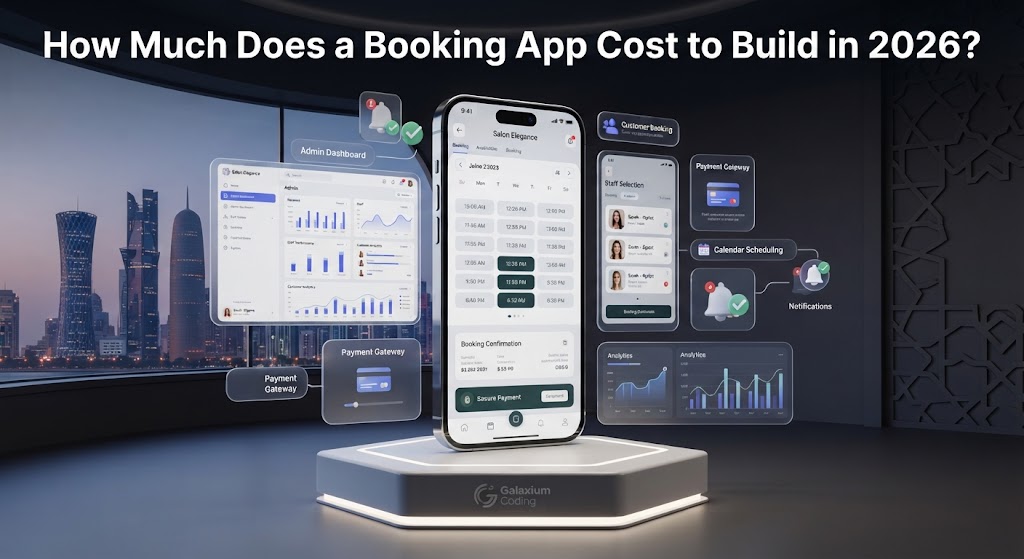
Salon Booking App
A salon booking application may require:
Customer accounts
Service selection
Staff selection
Appointment scheduling
Availability
Online payment
Promotions
Reminders
Reviews
A single-location salon can be much simpler than a marketplace containing hundreds of salons.
Healthcare Appointment App
Healthcare booking platforms may require:
Doctor profiles
Specializations
Availability
Patient accounts
Appointment scheduling
Medical information
Notifications
Payment
Video consultations
Secure data management
Healthcare applications may therefore require additional security and compliance considerations.
Restaurant Reservation App
A restaurant booking platform may include:
Restaurant profiles
Table availability
Date and time selection
Number of guests
Reservation confirmation
Cancellation
Special requests
Notifications
Branch management
If the platform becomes a restaurant marketplace, the complexity increases significantly.
Hotel Booking App
Hotel booking platforms can require:
Room listings
Availability
Search filters
Guest accounts
Date selection
Pricing
Payment
Booking confirmation
Cancellation
Promotions
Hotel management
Third-party hotel APIs
External inventory and booking APIs can add considerable technical complexity.
Home-Service Booking App
A home-service platform may connect customers with technicians or service providers.
It can include:
Customer app
Provider app
Admin panel
Location services
Service selection
Availability
Booking
Payments
GPS
Notifications
Ratings
Real-time status
Because multiple parties interact with the system, the development requirements are higher.
Appointment Marketplace
A marketplace is more complex than a normal booking application.
For example:
Customer → Marketplace → Business → Staff → Payment → Notification
The platform may need separate dashboards for customers, providers and administrators.
What Features Should a Booking App Have?
The feature list should be based on the actual business workflow.
User Registration and Login
Customers may register using:
Email
Phone number
Social login
OTP verification
A business may also require different authentication methods for staff and administrators.
User Profiles
A customer profile can contain:
Name
Phone
Email
Preferences
Booking history
Saved services
Payment information
Loyalty information
Service Catalogue
Customers need to understand what they are booking.
A service catalogue can display:
Service name
Description
Duration
Price
Provider
Availability
Images
Special requirements
Calendar and Availability
This is the heart of a booking application.
The system needs to know:
Working hours
Holidays
Staff availability
Existing bookings
Blocked periods
Service duration
Break times
Buffer times
The booking engine must prevent conflicting appointments.
Online Payments
Payment functionality may include:
Credit and debit cards
Digital wallets
Local payment services
Deposits
Full payment
Refunds
Cancellation charges
The exact payment solution depends on the business, country and payment provider.
Push Notifications
Notifications can remind customers about:
Upcoming appointments
Booking confirmations
Cancellations
Rescheduling
Payments
Promotions
New availability
Notifications can reduce missed appointments and improve communication.
Admin Dashboard
A professional booking application normally needs an administration interface.
The dashboard may provide:
Booking calendar
Customer management
Staff management
Service management
Payment management
Reports
Notifications
Promotions
Settings
The dashboard can be a web application even when the customer experience is primarily mobile.
Businesses needing this type of connected platform can also explore web application development.
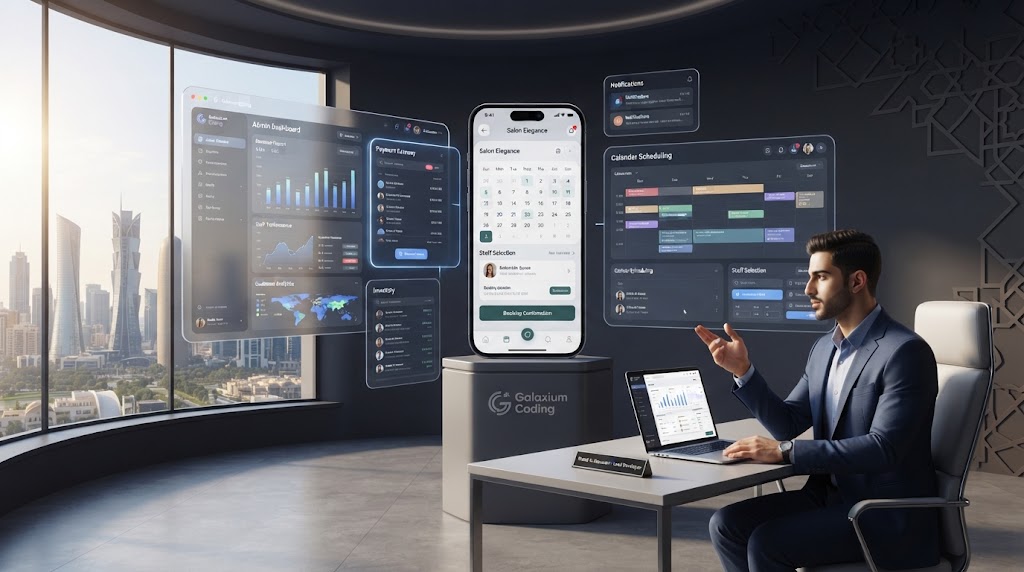
How Much Does an Admin Dashboard Add to Booking App Cost?
An admin dashboard can range from a relatively simple management screen to a complete business-management platform.
A simple dashboard may include:
Bookings
Customers
Services
Availability
A larger dashboard may include:
Revenue reports
Staff performance
Branch management
Customer analytics
Marketing
Promotions
Inventory
CRM
Accounting integrations
Automated workflows
The more business processes the dashboard controls, the more development work is required.
Does Android and iOS Increase the Cost?
Yes, platform scope affects development.
Businesses generally have several options.
Android Only
The application is developed for Android devices.
This can reduce the initial scope if the business only needs Android.
iOS Only
The application is developed for Apple devices.
Android + iOS
The application supports both major mobile ecosystems.
A cross-platform framework such as Flutter or React Native can allow developers to build for multiple platforms from a shared codebase, although the final architecture and project requirements determine the actual savings.
Published Qatar estimates show that cross-platform development can have a lower development cost than building separate native applications, particularly for business applications that do not require highly platform-specific functionality.
Galaxium Coding also provides mobile application development for businesses requiring custom mobile experiences.
Does Arabic Support Increase Booking App Cost?
For Qatar-focused applications, bilingual support can be important.
A bilingual application may need:
English interface
Arabic interface
RTL layout
Translated content
Localized notifications
Arabic-friendly typography
RTL testing
Arabic support is not simply a matter of translating words.
The user interface must also work correctly from right to left.
If Arabic and English are required from the beginning, the architecture and UI/UX design should account for both languages during development.
Payment Integration and Booking App Cost
Payment integration adds development and testing requirements.
A booking application may need to handle:
Payment initiation
Payment confirmation
Failed transactions
Refunds
Cancellation charges
Receipts
Transaction records
Security
Payment-provider APIs
For example, a hotel reservation application may charge the customer immediately.
A salon may instead collect a deposit.
A consultant might allow payment after the appointment.
The payment workflow therefore needs to match the business model.
Real-Time Booking and Availability
Real-time functionality can increase development complexity.
Imagine two customers attempting to reserve the same appointment at almost exactly the same time.
The system needs appropriate booking logic to prevent double booking.
A more advanced booking engine may also need:
Real-time availability
Temporary slot reservation
Automatic expiration
Conflict detection
Staff calendars
Branch calendars
Time-zone handling
Cancellation windows
The more complex the scheduling rules, the more engineering is required.
GPS and Location Features
GPS can be useful for service businesses.
For example, a home-maintenance application may allow customers to share their location with a technician.
A delivery or transportation booking application may also require:
Maps
Geolocation
Route information
Distance calculation
Live location
Driver tracking
These features can increase development and infrastructure costs.
AI Features in Booking Apps
AI is becoming another potential layer of booking applications.
For example, an AI assistant could understand:
"I need a dentist appointment tomorrow afternoon."
The system could then identify suitable availability and help the customer complete the booking.
AI could also be used for:
Customer support
Appointment recommendations
FAQ responses
Automated reminders
Lead qualification
Personalized offers
Booking assistance
Galaxium Coding has also covered AI appointment and booking systems as part of broader business automation.
However, AI should be added because it solves a genuine business problem, not simply because it is a current technology trend.
Booking App Development Cost Breakdown
A useful way to think about the budget is to divide the project into development components.
Component | Typical Cost Impact |
|---|---|
UI/UX Design | Low–Medium |
Customer Mobile App | Medium–High |
Admin Dashboard | Medium |
Backend/API | Medium–High |
Database | Medium |
Payment Integration | Medium |
Notifications | Low–Medium |
Calendar Engine | Medium–High |
GPS/Maps | Medium–High |
Real-Time Features | High |
CRM Integration | Medium–High |
AI | Medium–High |
Security | Medium–High |
Testing | Medium |
Cloud Infrastructure | Ongoing |
Maintenance | Ongoing |
These categories are useful for planning, but they should not be treated as independent fixed prices because many development tasks overlap.
How Long Does It Take to Build a Booking App?
The timeline depends on the scope.
A basic booking MVP might take several weeks.
A mid-level booking application can take several months.
A large multi-role platform may take considerably longer.
A simplified planning model could look like this:
Project Type | Approximate Timeline |
|---|---|
Basic MVP | 1–3 months |
Mid-Level Booking App | 3–5 months |
Advanced Platform | 5–8+ months |
Enterprise Platform | 8–12+ months |
These are planning estimates rather than guaranteed delivery periods. Design, approvals, integrations, testing, scope changes and third-party dependencies can affect the timeline.
How to Reduce Booking App Development Cost
You do not necessarily need to build every feature at launch.
Start With an MVP
An MVP could include:
Registration
Service listing
Availability
Booking
Confirmation
Basic admin panel
Then later add:
Payments
Loyalty
Reviews
AI
Advanced analytics
CRM
Multiple branches
Use Cross-Platform Development Where Appropriate
A shared mobile codebase can potentially reduce duplicated development work for Android and iOS.
The decision should still be based on technical requirements rather than price alone.
Reuse Existing Business Systems
If your company already has:
CRM
Website
Customer database
Payment system
ERP
APIs
developers may be able to integrate these systems rather than rebuilding everything.
Avoid Unnecessary Features
A common mistake is trying to build a platform with dozens of features before understanding what customers actually need.
Build the core booking journey first.
Hidden Costs of a Booking App
The initial development quotation is not always the complete lifetime cost.
Businesses should also consider:
Hosting
The backend, database and APIs need infrastructure.
App Store Accounts
Applications distributed through Apple and Google require developer accounts and must comply with their current policies and fees.
Payment Provider Fees
Payment providers may charge transaction or service fees.
SMS and OTP
If customers receive SMS verification or reminders, messaging costs may apply.
Maps
GPS and mapping services may have usage-based pricing.
Third-Party APIs
External services can introduce subscription or usage charges.
Maintenance
The application needs updates when:
Mobile operating systems change
APIs change
Security issues are discovered
New devices are released
Business requirements change
Marketing
Building the application does not automatically create users.
Businesses may need:
SEO
Social media
Advertising
App Store Optimization
Email marketing
Customer campaigns
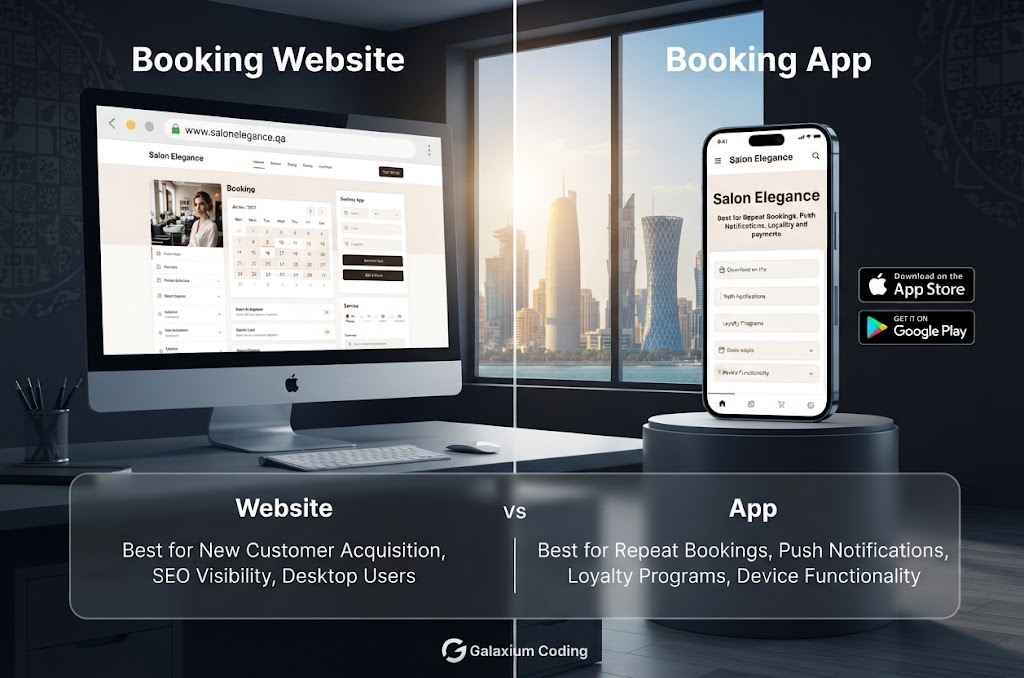
Booking App vs Booking Website
Businesses often ask whether they need an app or whether a website is enough.
Booking Website
A booking website can be useful for:
Search visibility
New customer acquisition
Sharing links
Desktop users
Google searches
Public information
Booking App
A mobile application can provide:
Push notifications
Faster repeat bookings
Customer accounts
Personalized experiences
Loyalty programs
Device functionality
Mobile-first workflows
In many cases, the two work together.
Website → Customer Acquisition
Mobile App → Repeat Customer Experience
A business can therefore use its website to attract customers and its app to serve returning customers.
Booking App or Marketplace?
This distinction is extremely important when estimating cost.
A booking app for one business might look like:
Customer → Business → Booking
A marketplace might look like:
Customer → Marketplace → Multiple Businesses → Staff → Payment → Booking
A marketplace may need:
Provider onboarding
Provider profiles
Provider dashboards
Commission management
Multiple calendars
Provider payouts
Reviews
Dispute management
Search
Filters
Location
Multiple payment flows
That can make a marketplace significantly more complex than a single-business booking application.
Security Requirements for Booking Apps
Booking systems often process personal information.
Depending on the business, the platform may store:
Names
Phone numbers
Email addresses
Appointment information
Payment-related information
Location data
Business information
Security should therefore be considered from the beginning.
Important areas include:
Secure authentication
Authorization
Encrypted communication
Secure API design
Database protection
Access controls
Backup procedures
Logging
Secure payment handling
Regular updates
Businesses operating in Qatar should also consider applicable privacy and data-protection obligations for their specific service and data flows.
How to Calculate Your Booking App Budget
Before contacting a development company, answer these questions.
Question 1: Who Will Use the App?
Is it for:
Customers?
Staff?
Businesses?
Service providers?
Drivers?
Administrators?
Question 2: What Is Being Booked?
Is it:
Appointment
Table
Room
Vehicle
Service
Consultation
Class
Property
Event
Question 3: Is Payment Required?
Decide whether customers:
Pay upfront
Pay a deposit
Pay later
Pay after service
Question 4: How Many Locations?
One location is simpler than:
Multiple branches
Multiple cities
Multiple countries
Question 5: Do You Need Real-Time Availability?
If yes, define exactly how availability works.
Question 6: Do You Need Arabic?
If the target market includes Arabic-speaking customers, plan for RTL support from the beginning.
Question 7: Do You Need an Admin Panel?
Most professional booking systems do.
Question 8: Do You Need a Mobile App for Staff?
If staff members need to manage appointments, schedules or service requests from their phones, a separate staff experience may be required.
Example: Building a Salon Booking App
Imagine a salon in Doha wants a booking application.
Version 1
The MVP includes:
Customer registration
Service catalogue
Staff selection
Calendar
Appointment booking
Cancellation
Confirmation notifications
Admin dashboard
This could form a relatively focused project.
Version 2
The salon adds:
Online payments
Loyalty points
Promotions
Customer reviews
Multiple branches
Staff accounts
Revenue reports
The development scope increases.
Version 3
The business expands into a marketplace.
Now customers can find multiple salons and compare:
Services
Prices
Ratings
Availability
Location
The platform becomes substantially more complex.
This example demonstrates why asking only "How much does a booking app cost?" is not enough.
The better question is:
"What booking system are we actually building?"
How Galaxium Coding Can Help
A booking app can be a standalone product or part of a larger business ecosystem.
Galaxium Coding works with businesses that require technology solutions such as:
Custom software
Mobile applications
Web applications
Business automation
CRM systems
ERP systems
API integrations
Cloud solutions
AI-powered systems
For businesses planning a connected platform, Galaxium Coding's mobile application development services can support custom mobile requirements.
A booking platform can also connect with Cloud & DevOps solutions when the application requires scalable infrastructure, deployment and ongoing operational support.
You can also explore Galaxium Coding's projects and portfolio to understand the company's broader technology work.
What Should You Ask a Booking App Development Company?
Before accepting a quotation, ask:
What exactly is included?
Is UI/UX design included?
Is the backend included?
Is the admin dashboard included?
Are Android and iOS included?
Is payment integration included?
Are API integrations included?
Is Arabic/RTL support included?
Is testing included?
Is app-store submission included?
Is cloud deployment included?
What happens after launch?
How are future changes priced?
What is included in maintenance?
Who owns the source code?
How is customer data protected?
What happens if the project scope changes?
A detailed scope document can prevent misunderstandings later.
Why the Cheapest Quotation May Not Be the Complete Cost
A very low initial quotation may exclude important components.
For example, one quotation might include only the mobile interface.
Another might include:
UI/UX
Mobile apps
Backend
Database
APIs
Admin panel
Testing
Deployment
Security
Maintenance
These are not equivalent proposals.
Instead of comparing only the headline price, compare the actual scope.
The total development budget should reflect the complete system required to operate the booking business.
Booking App Development Process
A professional booking application generally follows a structured process.
Step 1: Discovery
Define the business model, users, booking process and objectives.
Step 2: Requirements
Document:
Features
User roles
Integrations
Booking rules
Payment rules
Security requirements
Step 3: UI/UX Design
Design the customer and administrator experience.
Step 4: Architecture
Plan:
Database
Backend
APIs
Authentication
Infrastructure
Step 5: Development
Build the application and backend.
Step 6: Integration
Connect:
Payments
Maps
CRM
Notifications
Other APIs
Step 7: Testing
Test the system across devices and scenarios.
Step 8: Deployment
Prepare the application for production and app stores.
Step 9: Maintenance
Monitor, update and improve the platform.
Businesses can also review the custom software development process to understand how larger software projects move from requirements through development and launch.
Future of Booking Apps
Booking platforms are becoming more connected.
Future booking systems can combine:
Mobile applications
AI assistants
Voice interfaces
CRM
Payments
Customer analytics
Automated marketing
Real-time availability
Personalization
For example, a customer could interact with an AI assistant and say:
"Book my usual appointment for Friday afternoon."
The system could identify the customer's preferences, check availability and present appropriate options.
The technology should still remain connected to the underlying booking engine so that the actual appointment is recorded correctly.
Final Thoughts: How Much Does a Booking App Cost?
So, how much does a booking app cost to build in 2026?
For a Qatar-focused project, a reasonable starting budgeting framework is:
Basic booking MVP: around QAR 20,000–50,000+
Mid-level booking application: around QAR 50,000–150,000+
Advanced booking platform: around QAR 150,000–300,000+
Enterprise or marketplace system: QAR 300,000+ depending on complexity
These figures are directional rather than fixed prices because the scope of booking applications varies enormously. Published Qatar market estimates also show wide ranges, reinforcing the importance of defining the exact feature set before requesting a quotation.
The most important cost drivers are:
Features
Number of platforms
User roles
Booking complexity
Payment integration
Admin dashboard
Backend architecture
Third-party APIs
GPS
Real-time functionality
Arabic/English support
Security
AI
Maintenance
The best starting point is therefore not a price.
It is a clearly defined booking workflow.
Once the business requirements are understood, a development team can create a more accurate scope, timeline and quotation.
If you are planning a booking application for a business in Qatar, you can contact Galaxium Coding to discuss your requirements and explore a custom development approach.
Frequently Asked Questions
How much does a basic booking app cost?
A basic booking MVP can start around QAR 20,000–50,000+, depending on its features, platform requirements and backend complexity. This is a planning range rather than a fixed quotation.
How much does a booking app cost in Qatar?
Published 2026 Qatar app-development estimates vary widely. Basic applications are commonly estimated from tens of thousands of QAR, while mid-level and advanced applications can reach QAR 150,000–300,000 or more depending on features and integrations.
How much does a salon booking app cost?
A salon booking app can range from a relatively simple MVP to a multi-branch platform. The cost depends on whether it needs staff accounts, payments, multiple branches, loyalty, reviews, promotions and advanced scheduling.
How much does an appointment booking app cost?
A simple appointment application can be relatively straightforward. Adding online payments, multiple providers, real-time calendars, notifications, CRM integration and multiple user roles increases the development scope.
Does a booking app need an admin panel?
Most professional booking platforms benefit from an admin panel because businesses need to manage customers, services, schedules, bookings, payments and reports.
Can a booking app accept online payments?
Yes. Payment gateways can be integrated into booking applications, although the exact implementation depends on the payment provider, transaction workflow and business requirements.
Can I build a booking app for both Android and iOS?
Yes. Businesses can build separate native applications or use a cross-platform approach such as Flutter or React Native. The appropriate option depends on functionality, performance requirements and project scope.
Does Arabic support increase app development cost?
It can. Arabic support may require RTL interface design, localization, Arabic content, typography and additional testing.
How long does it take to build a booking app?
A focused MVP may take around one to three months, while mid-level and advanced systems can require several months. Complex marketplace and enterprise platforms may take significantly longer.
Can AI be added to a booking app?
Yes. AI can assist with customer support, appointment discovery, recommendations, reminders and conversational booking workflows.
Should I build a booking app or website?
It depends on your business model. A website can be valuable for search visibility and acquiring new customers, while an app can provide a better experience for frequent customers, notifications and personalized services. Many businesses use both.
Can Galaxium Coding build a booking application?
Galaxium Coding provides software development, web application and mobile application development services. Businesses can discuss their booking requirements and determine the appropriate technology architecture.