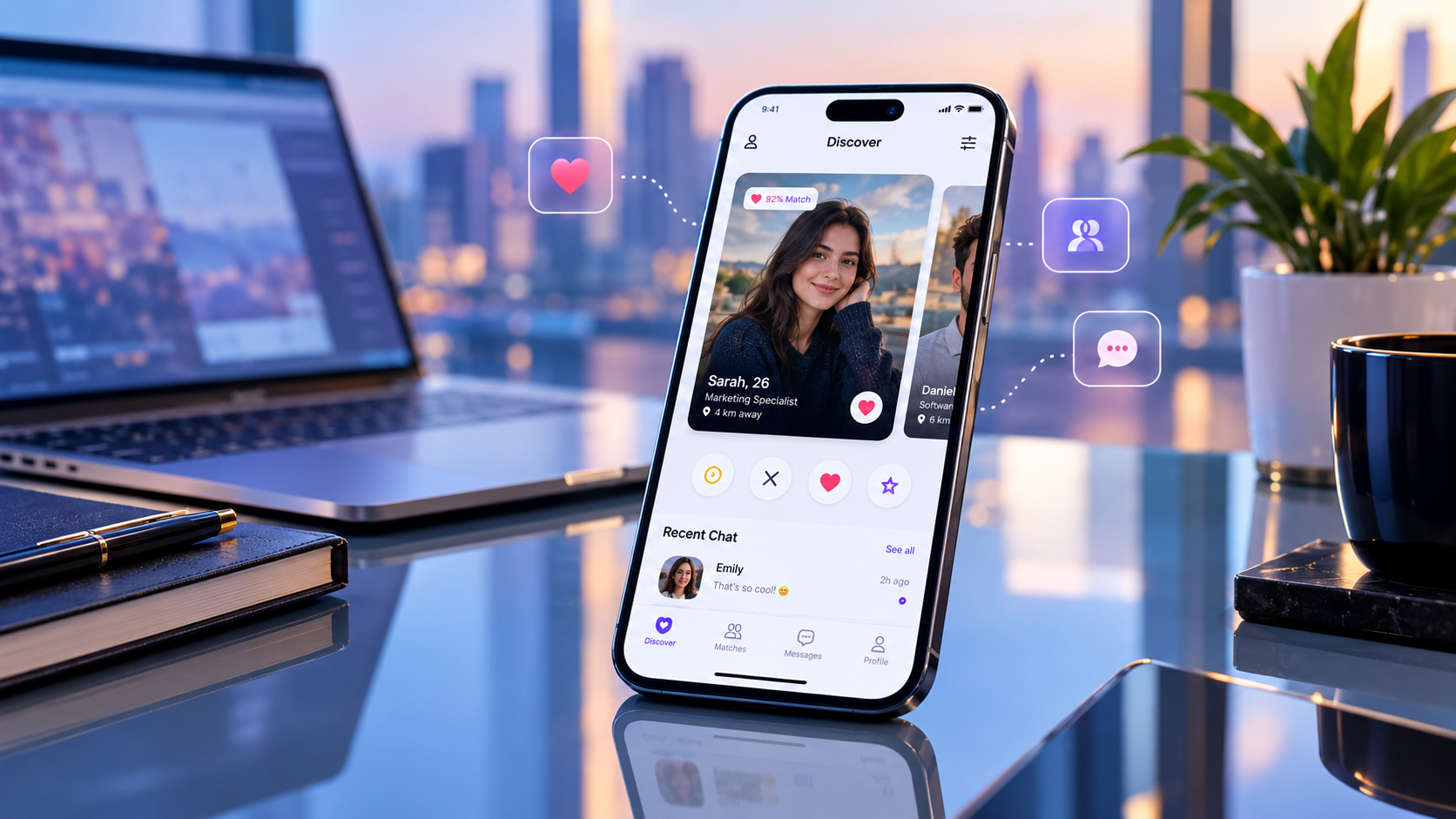
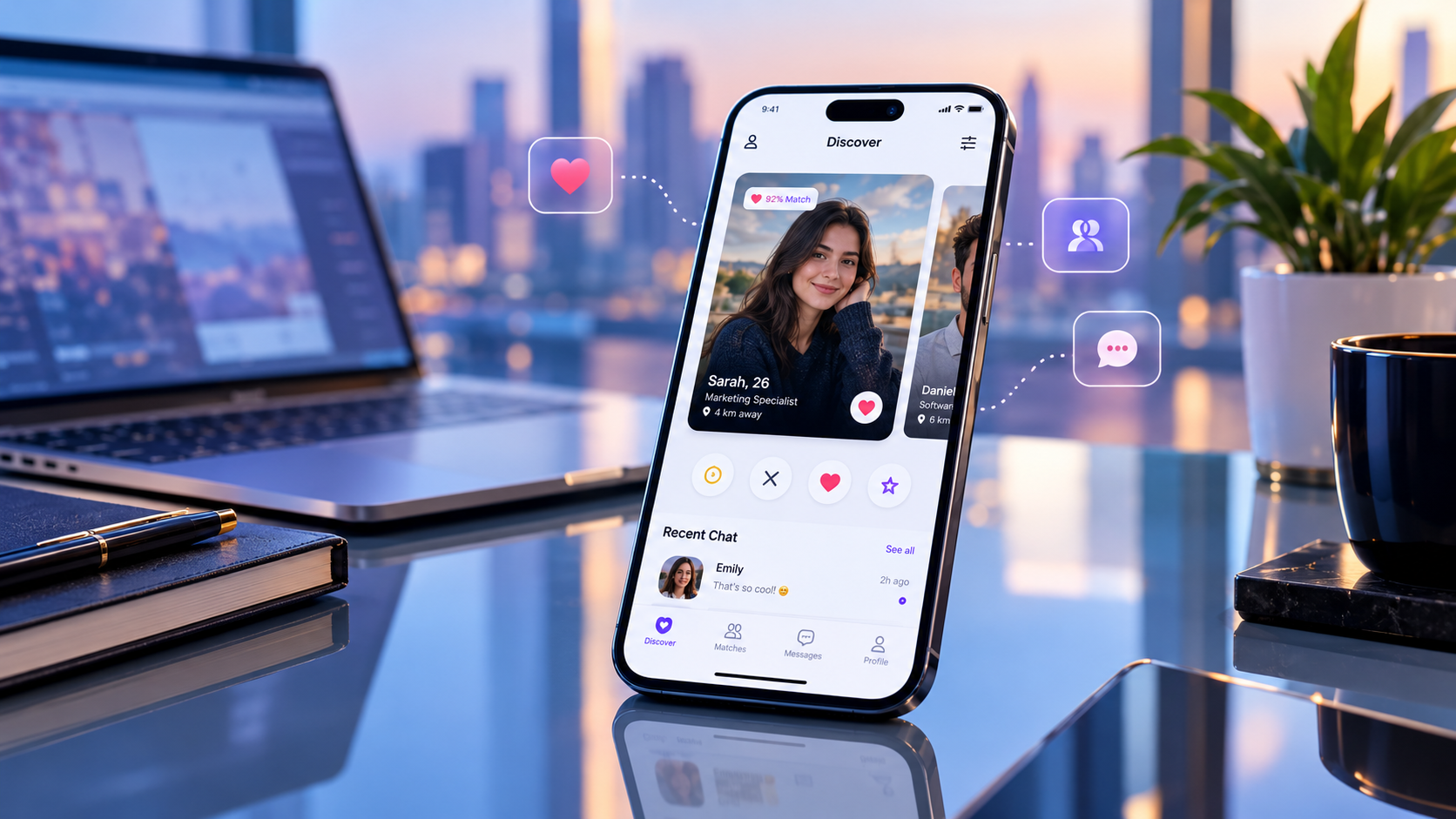
Best Couple Apps in 2026: Features, Benefits & Top Picks
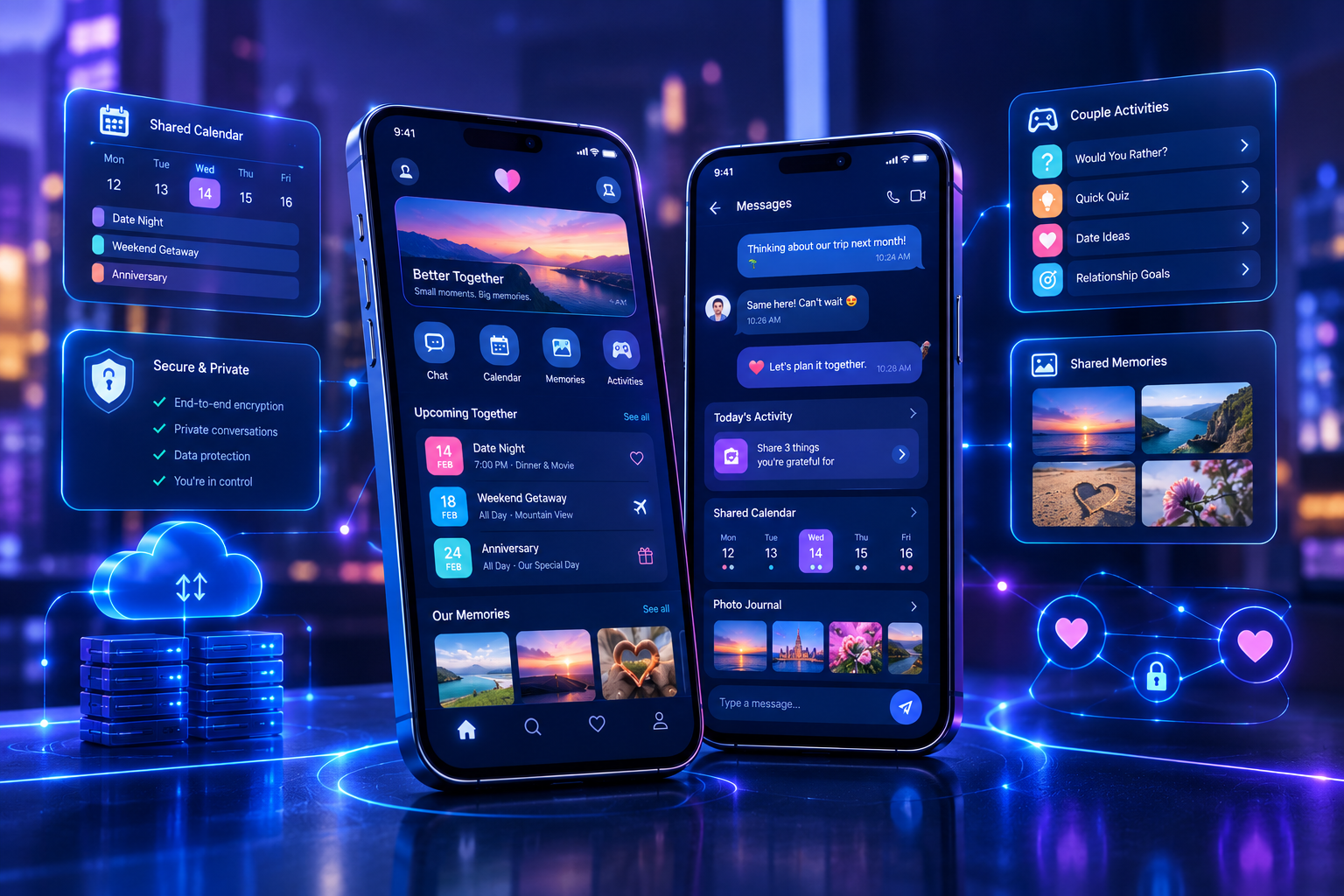
Explore the best couple apps in 2026 for communication, shared schedules, digital memories, and staying connected.
Best Couple Apps in 2026: Features, Benefits & Top Picks
Technology has changed the way couples communicate, organize their lives, and create memories together. Whether partners live in the same city or maintain a long-distance relationship, the right mobile application can make everyday communication easier and shared experiences more enjoyable.
The best couple apps in 2026 offer different solutions for different needs. Some help partners communicate through daily questions and relationship activities, while others provide private messaging, shared calendars, photo collections, or tools for organizing household finances.
However, no single application is ideal for every couple. The right choice depends on whether you want to improve communication, remember important dates, plan activities, share memories, or stay connected while living apart.
This guide compares popular couple apps, explains their key features and benefits, and provides practical advice for choosing the right solution.
What Are Couple Apps?
Couple apps are mobile or web applications designed to help two partners communicate, coordinate their schedules, share experiences, or strengthen their connection.
Unlike general messaging applications, some couple-focused platforms combine features such as private conversations, shared calendars, relationship questions, virtual activities, anniversary reminders, and collaborative journals.
Common categories include:
Communication apps: Help partners exchange messages and discuss meaningful topics.
Relationship apps: Provide conversation prompts, quizzes, and guided activities.
Shared calendar apps: Make it easier to coordinate appointments, holidays, and date nights.
Memory-sharing apps: Store photos, notes, and special moments.
Long-distance relationship apps: Offer activities and tools to help couples feel connected across different locations.
Financial planning apps: Help partners coordinate budgets, bills, and shared expenses.
Some applications combine several of these functions, while others focus on doing one thing particularly well.
Best Couple Apps in 2026: Top Picks Compared
The following shortlist covers different use cases rather than claiming that one application is universally the best. Features, availability, subscription terms, and regional pricing can change, so check the official app listing before downloading or subscribing.
App | Best for | Key features |
|---|---|---|
Communication and relationship activities | Daily questions, quizzes, guided exercises | |
Short daily conversations | Personalized questions and shared answers | |
Private communication and memories | Chat, shared albums, special-date features | |
Organizing life together | Shared calendars and planning | |
Shared schedules | Calendars, reminders, event coordination | |
Playful daily connection | Shared widgets and virtual interactions | |
Managing finances together | Budgeting, bills, financial visibility | |
Household financial planning | Budgets, spending tracking, financial goals |
These applications serve different purposes. A relationship-focused app may help partners start meaningful conversations, while a calendar or budgeting tool may be more useful for managing everyday responsibilities.
1. Paired — Best for Communication and Relationship Activities
Paired is designed to help couples build regular communication habits through questions, quizzes, and guided activities.
Its approach encourages partners to make time for conversations they might otherwise postpone during busy workdays or family routines.
Key features
Daily relationship questions.
Quizzes and interactive activities.
Conversation prompts.
Content for different relationship stages.
Activities intended to encourage communication.
Benefits
Paired may suit couples who want a structured way to talk about their expectations, experiences, and relationship goals. Short activities can also make it easier to establish a regular connection routine.
Potential limitation: Many features may require a paid subscription, depending on the current plan and region.
Best for: Couples who want to make meaningful conversations part of their everyday routine.
Official website: Paired
2. Agapé — Best for Daily Questions
Agapé centers its experience on answering questions that encourage partners to learn more about each other.
The concept is straightforward: a question gives both people an opportunity to share thoughts, preferences, and experiences they might not discuss naturally.
Key features
Daily conversation prompts.
Questions tailored to different relationships or circumstances.
Shared responses.
Activities that encourage reflection.
Benefits
A lightweight daily question can be easier to maintain than a lengthy relationship course. It can provide a simple starting point for conversations during a busy week.
Potential limitation: Couples who want extensive scheduling, messaging, or project-management features may need another application.
Best for: Partners who want a small daily habit that encourages conversation.
Official website: Agapé
3. Between — Best for Private Chats and Shared Memories
Between is designed around a shared digital space for two people. Depending on the current version and platform, it offers features such as messaging, photo collections, and reminders for special occasions.
Key features
Private conversations.
Shared photos and memories.
Special-date reminders.
Couple-focused digital organization.
Benefits
Keeping conversations and selected memories in one place can help couples organize their shared experiences without relying entirely on general messaging threads.
Potential limitation: Users should review current privacy information, platform compatibility, backup options, and subscription features before moving personal memories into the application.
Best for: Couples who want a dedicated space for conversations, photographs, and meaningful dates.
Official website: Between
4. Cupla — Best for Shared Calendars and Planning
Managing two schedules can become complicated when partners have different working hours, family responsibilities, appointments, and social commitments.
Cupla focuses on coordinating calendars and helping couples find time for shared activities.
Key features
Shared scheduling.
Calendar coordination.
Date planning.
Reminders and schedule organization.
Benefits
A shared calendar can reduce missed appointments and make planning easier. Couples can coordinate everyday responsibilities while protecting time for activities together.
Potential limitation: Review supported calendar services and integration requirements before relying on the app for important schedules.
Best for: Partners with busy or changing schedules who want to organize their time together.
Official website: Cupla
5. TimeTree — Best for Simple Shared Scheduling
TimeTree is a shared calendar application that can be used by couples, families, and groups.
Although it is not exclusively designed for romantic relationships, its shared calendars and event-management features can be useful for partners who want a common view of their commitments.
Key features
Shared calendars.
Event reminders.
Schedule coordination.
Event-related communication.
Calendar organization.
Benefits
A shared calendar makes it easier to track birthdays, appointments, travel plans, family events, and date nights.
Potential limitation: It is a general-purpose calendar rather than a dedicated relationship application.
Best for: Couples who prioritize scheduling and want to coordinate events in one place.
Official website: TimeTree
6. Widgetable — Best for Playful Everyday Connection
Widgetable offers shared widgets and playful features that can help people feel connected through their phone's home or lock screen.
Depending on the available version, its features may include shared visual updates, virtual interactions, and other personalized widgets.
Key features
Customizable widgets.
Shared digital interactions.
Personalization options.
Features designed for lightweight daily engagement.
Benefits
A shared widget can offer a small reminder of a partner throughout the day without requiring a lengthy conversation or a dedicated messaging session.
Potential limitation: Widget features, permissions, and premium options can vary across devices and versions.
Best for: Couples who enjoy personalized phone screens and small digital gestures.
Official website: Widgetable
7. Honeydue — Best for Managing Shared Expenses
Money management is an important part of everyday life for couples who share bills, household expenses, or financial goals.
Honeydue is designed to help partners coordinate financial information and manage expenses together.
Key features
Shared financial visibility.
Budget and expense tracking.
Bill reminders.
Spending coordination.
Benefits
A shared financial overview can help partners discuss household costs and plan upcoming payments. It can also make it easier to establish spending expectations.
Potential limitation: Supported financial institutions, account connections, and features vary. Check availability in your country before connecting financial accounts.
Best for: Couples who want to organize household finances and shared expenses.
Official website: Honeydue
8. Monarch Money — Best for Joint Financial Planning
Monarch Money is a personal finance platform that supports collaborative budgeting and financial planning.
It is not specifically a romantic relationship app, but couples who manage household finances together may find its budgeting and financial organization features useful.
Key features
Budget tracking.
Expense categorization.
Financial goal planning.
Household financial organization.
Benefits
A consolidated view of spending and financial goals can help partners discuss their priorities and plan for larger expenses.
Potential limitation: Availability and account integrations depend on the service's supported markets and financial institutions.
Best for: Couples who want a more comprehensive approach to household budgeting.
Official website: Monarch Money
Benefits of Using Couple Apps
A couple app is useful when it addresses a real need in a relationship or makes everyday coordination simpler.
1. Better Communication
Daily questions and guided activities can help partners start conversations about preferences, expectations, plans, and personal experiences.
The value comes from the discussion itself, not simply from completing an activity inside an application.
2. Easier Long-Distance Communication
Partners who live in different cities or countries may have fewer opportunities to spend time together in person.
Video calls, shared activities, messages, and digital memories can help them maintain routines despite physical distance.
3. Better Organization
Shared calendars and reminders help couples coordinate:
Birthdays and anniversaries.
Work schedules and appointments.
Holidays and travel.
Household responsibilities.
Planned activities and date nights.
These tools are especially useful when both partners have busy schedules.
4. Shared Memories
Photo albums, notes, and digital journals can help couples preserve important experiences in one accessible location.
Before storing personal photographs or private conversations, review the app's privacy policy, backup arrangements, and account-deletion options.
5. Financial Coordination
Budgeting applications can help partners review shared costs, plan savings, and keep track of recurring bills.
Financial transparency should be agreed upon by both people. A shared tool should not be used to monitor a partner without their knowledge or consent.
6. More Intentional Time Together
A couple app can provide a reminder to pause, talk, play a game, or plan an activity.
However, apps are supporting tools rather than replacements for honest communication, mutual respect, or professional help when a relationship faces serious difficulties.
How to Choose the Best Couple App
Choosing an application becomes easier when you identify what you want it to accomplish.
Step 1: Identify Your Main Goal
Start by asking which problem you want to solve.
Want better conversations? Consider Paired or Agapé.
Need a shared calendar? Compare Cupla and TimeTree.
Want a dedicated space for memories? Explore Between.
Enjoy playful digital interactions? Consider Widgetable.
Need to organize shared expenses? Evaluate Honeydue or Monarch Money, subject to regional availability.
You do not need an all-in-one application if a simpler tool meets your needs.
Step 2: Check Platform Compatibility
Confirm that the application works on both partners' devices.
Consider:
Android and iOS availability.
Web or desktop access, if needed.
Synchronization across devices.
Compatibility with existing calendars.
Accessibility and language support.
A tool is less useful if one partner cannot access its essential features.
Step 3: Compare Free and Paid Features
Some apps provide a free version with optional subscriptions. Others reserve particular activities or advanced tools for paying users.
Before subscribing, check:
What is included in the free version.
Whether both partners need separate subscriptions.
Monthly and annual billing options.
Trial duration and renewal terms.
Cancellation and refund policies.
Whether the subscription price varies by country.
Prices can change, so confirm the current terms in the official app store or on the developer's website.
Step 4: Review Privacy and Security
Couple apps may store personal messages, photographs, schedules, financial details, or sensitive relationship information.
Before using an app, review its privacy policy and consider:
What information it collects.
How data is stored and protected.
Whether information is shared with third parties.
What permissions the app requests.
Whether users can delete their accounts and data.
Whether shared content can be exported or backed up.
For additional guidance, review Apple's App Store Review Guidelines, which address privacy, data collection, and user-generated content requirements for apps distributed through its store.
Step 5: Consider Ease of Use
A complicated application may be difficult to incorporate into everyday routines.
Look for a clear interface, useful notifications, reliable synchronization, and features that both partners actually want to use.
Step 6: Test Before Committing
Start with one application that addresses your most important need. Use it for a short trial period and discuss whether it genuinely improves your routine.
If you do not use a feature regularly, it may not justify an ongoing subscription.

Couple Apps for Long-Distance Relationships
Long-distance couples may benefit from applications that make it easier to communicate consistently and share everyday experiences.
Useful features include:
Scheduled calls and reminders.
Daily conversation prompts.
Shared photo collections.
Virtual games and activities.
Countdown reminders for planned visits.
Shared calendars across time zones.
For example, partners living in different time zones can use a shared calendar to identify convenient times for calls. A conversation app can provide an activity for those calls, while a shared photo space can help preserve everyday memories.
The best combination depends on the couple. One messaging or communication tool and one shared calendar may be sufficient.
Are Couple Apps Safe to Use?
Couple apps can be useful, but safety depends on the app's design, privacy practices, and how the partners use it.
Because these platforms may contain personal information, users should pay particular attention to privacy settings and account security.
Important Safety Practices
Use strong, unique passwords where accounts are required.
Enable multifactor authentication if available.
Review permissions before granting access to photos, contacts, location, or financial accounts.
Avoid sharing sensitive information unnecessarily.
Confirm whether messages and media are encrypted and what that protection covers.
Check how backups and account deletion work.
Download apps from official stores or verified developer websites.
For financial applications, verify the provider's availability and security arrangements before connecting accounts.
For relationship applications, both partners should understand what information is shared and have control over their own accounts and personal data.
Couple App Development: What Businesses Should Know
The popularity of relationship-focused applications creates opportunities for businesses interested in developing a new mobile product.
A successful couple app needs more than a collection of features. Its design should address a specific audience, provide a clear reason to return, and protect the information users choose to share.
Essential Features for a New Couple App
A first version might include:
Account registration: Secure onboarding and account management.
Partner linking: A clear invitation or pairing process with appropriate consent.
Shared activities: Questions, games, or interactive exercises.
Private communication: Messaging or another suitable communication method.
Reminders: Optional notifications for activities and important dates.
Shared memories: A private space for selected photographs or notes.
Privacy settings: Controls for permissions, visibility, and data management.
Account deletion: A straightforward process for users who want to leave the platform.
Not every application needs all these features. A focused product should begin with the functionality that best supports its central purpose.
Choosing the Right Technology
The appropriate technology stack depends on the app's functionality, target platforms, budget, and expected usage.
Component | Possible technologies | Purpose |
|---|---|---|
iOS application | Swift, SwiftUI | Native Apple app experience |
Android application | Kotlin | Native Android experience |
Cross-platform application | Flutter, React Native | Shared development across platforms |
Backend | Node.js, Python, Java | APIs, account management, business logic |
Database | PostgreSQL or another suitable database | Storing structured information |
Real-time communication | WebSockets or managed services | Messaging and live updates |
Cloud infrastructure | AWS, Azure, Google Cloud | Hosting, monitoring, and scaling |
These are examples, not mandatory choices. A development team should select technologies based on project requirements rather than trends alone.
Businesses exploring a custom mobile product can review Galaxium Coding's mobile application development services.
For applications that require specialized workflows or integrations, custom software development may also be relevant.
Privacy-First Product Design
A couple app may process personal conversations, private photographs, location information, and relationship preferences.
Developers should therefore consider privacy and security during product planning rather than adding them at the end.
Important considerations include:
Collecting only necessary information.
Protecting data in transit and at rest.
Restricting access to private records.
Providing clear consent and privacy controls.
Defining data retention and deletion procedures.
Testing authentication and authorization.
Reviewing third-party integrations.
Businesses should also assess applicable privacy laws and platform requirements for their intended markets.
How Much Does Couple App Development Cost?
There is no single cost for developing a couple app. The budget depends on the feature set, design, integrations, platforms, security requirements, and development team's location and experience.
The following figures are illustrative planning estimates in US dollars, not verified market averages or vendor quotations.
Project scope | Illustrative budget |
|---|---|
Clickable prototype | $5,000–$15,000 |
Basic couple app MVP | $15,000–$40,000 |
Feature-rich couple app | $40,000–$100,000 |
Complex platform with advanced integrations | $100,000+ |
Actual costs can fall outside these ranges. Hosting, third-party services, maintenance, taxes, and app store-related costs may be additional.
A practical development plan should define the first release, estimate recurring expenses, and establish milestones before development begins.
Why Work With an Experienced Development Team?
An experienced team can help turn a product idea into a defined scope, select appropriate technologies, and plan testing, deployment, and ongoing maintenance.
Before selecting a provider, review its portfolio, communication process, technical approach, ownership terms, and support arrangements.
Businesses can explore Galaxium Coding's projects and portfolio to review its work, or contact the team to discuss a potential mobile application project.
Common Mistakes When Choosing Couple Apps
Choosing an App Without a Clear Purpose
Downloading several applications at once can create unnecessary complexity. Start with the feature that would be most useful to both partners.
Ignoring Subscription Terms
A free download does not always mean every feature is free. Review recurring billing, trials, and cancellation terms before subscribing.
Overlooking Privacy
Avoid granting unnecessary permissions or storing sensitive information without understanding how the application handles it.
Expecting Technology to Solve Every Relationship Problem
Apps can support communication and planning, but they cannot replace mutual effort, respect, or professional support when needed.
Failing to Check Compatibility
Before creating shared calendars, storing memories, or moving conversations, confirm that both partners can use the app and understand how their information will be synchronized.
Future Trends in Couple Apps
Several product directions may shape couple apps over time.
AI-Assisted Conversation Prompts
AI may help generate personalized questions, activity suggestions, or conversation starters. Such features should be transparent about their limitations and protect the privacy of the information users share.
More Personalized Experiences
Applications may offer more flexible activities and reminders based on user preferences, relationship goals, and chosen routines.
Better Cross-Device Experiences
Improved synchronization between phones, web applications, calendars, and wearable devices may make shared activities more convenient.
Greater Attention to Privacy
Clear consent, data minimization, stronger account controls, and transparent deletion policies will remain important considerations for applications that handle personal information.
These are possible product directions rather than guaranteed outcomes. Developers should validate new features with users and evaluate privacy risks before implementation.
Final Thoughts
The best couple apps in 2026 are the ones that fit your shared needs rather than the ones with the largest number of features.
Paired and Agapé are options for daily conversations, Between focuses on a dedicated space for communication and memories, Cupla and TimeTree help with scheduling, Widgetable offers playful digital interactions, and Honeydue or Monarch Money may suit couples managing shared finances.
Before downloading an app, compare its features, compatibility, subscription terms, and privacy practices. Start with one tool that solves a real problem and keep using it only if it adds value to your everyday routine.
For businesses interested in creating a relationship-focused mobile product, careful feature planning, a suitable technology stack, and privacy-first development can provide a stronger foundation for launch.
To discuss a custom mobile application, contact Galaxium Coding.
Frequently Asked Questions
1. What is the best couple app in 2026?
There is no universal winner. Paired and Agapé focus on relationship conversations, Between supports communication and memories, and Cupla or TimeTree help coordinate schedules. The right choice depends on your needs.
2. Are there free apps for couples?
Yes. Several couple apps offer free versions, although some features may require subscriptions or in-app purchases. Check the current terms in your region before downloading.
3. Which couple app is best for long-distance relationships?
The best choice depends on how you prefer to stay connected. Conversation prompts, private messaging, shared activities, photo collections, and calendars can all help partners maintain routines across different time zones.
4. Which couple app is best for communication?
Paired and Agapé are designed around questions and conversation activities. They may be useful for partners who want a structured way to discuss their experiences and expectations.
5. Which app is best for sharing memories?
Between is an option for couples looking for a dedicated space for messaging and shared memories. Review its current features, privacy terms, and backup arrangements before storing personal content.
6. Are couple apps safe?
Safety depends on the provider's security practices and your settings. Review the privacy policy, account controls, permissions, encryption claims, and data-deletion options before sharing sensitive information.
7. Can couples use shared calendar apps?
Yes. Apps such as Cupla and TimeTree can help partners coordinate appointments, plans, and important dates. Confirm that the calendar integrations meet your requirements.
8. Can couple apps help improve relationships?
They can support regular conversations, planning, and shared activities. However, their effectiveness depends on how partners use them, and they are not a substitute for professional help when serious relationship difficulties arise.
9. How much does it cost to develop a couple app?
A basic MVP may require tens of thousands of dollars, while complex applications can cost considerably more. The actual budget depends on features, platforms, integrations, security, and ongoing maintenance.
10. What features should a new couple app include?
Start with the core purpose of the product. Depending on the concept, this could include partner linking, shared activities, reminders, messaging, memory storage, privacy settings, and account deletion.
11. Can AI be integrated into a couple app?
Yes. Potential uses include generating conversation prompts, suggesting activities, and personalizing selected experiences. AI features should be tested carefully and designed with appropriate privacy protections.
12. How do I choose between a free and paid couple app?
Try the free version first, identify which features you actually use, and compare the paid plan with your needs. Consider the subscription cost for both partners, renewal terms, and cancellation policy.