Top App Developers in 2026: How to Choose the Best App Development Company

Discover how to choose the best app development company in 2026 by evaluating technical expertise, services, costs, and project experience.
Top App Developers in 2026: How to Choose the Best App Development Company
Choosing the right app development company in 2026 is an important decision for startups, established businesses, and entrepreneurs planning to turn their ideas into digital products. With mobile applications becoming an essential part of customer engagement, business operations, and digital transformation, selecting the right development partner requires more than comparing prices or browsing portfolios.
The best app developers combine technical expertise, business understanding, user experience design, software engineering, security, and long-term product support. They should be able to understand your objectives, recommend suitable technologies, and develop an application that meets your users' expectations while supporting your business goals.
However, not every app development company is suitable for every project. A startup building its first minimum viable product (MVP) may need a different team structure from an enterprise developing a complex business application with multiple integrations.
This guide explores the top app development companies to consider in 2026, the services they offer, how to evaluate their capabilities, what mobile app development costs may involve, and how to select a reliable development partner.
What Are App Developers and What Do They Do?
App developers are professionals or companies responsible for designing, building, testing, deploying, and maintaining software applications for mobile devices, web browsers, or other digital platforms.
Depending on the project's requirements, an app development company may provide a complete development service, including:
Business analysis and requirements gathering
Product strategy and technical planning
UI/UX design and prototyping
Android application development
iOS application development
Cross-platform app development
Backend development and database management
API development and third-party integrations
Quality assurance and software testing
Cloud infrastructure and deployment
Application maintenance and technical support
For example, a retail business planning an e-commerce application may need customer registration, product catalogues, shopping carts, secure payments, order tracking, inventory integration, and an administrative dashboard.
The development company must understand how these components work together rather than focusing only on the mobile interface.
Businesses considering customized solutions can explore mobile application development services to understand how tailored applications can support different business requirements.
Why Businesses Need Professional App Developers in 2026
Mobile applications are no longer limited to large technology companies. Businesses across retail, healthcare, education, finance, logistics, real estate, hospitality, and professional services are using applications to improve customer experiences and streamline operations.
1. Better Customer Experience
A well-designed application makes it easier for customers to interact with a business.
Customers may use an application to:
Browse products and services
Schedule appointments
Place and track orders
Make payments
Receive updates and notifications
Access support
Manage their accounts
An intuitive mobile experience can reduce unnecessary steps and make important services more accessible.
2. Improved Business Efficiency
Applications can automate processes that previously required manual work.
For example, a service business can develop an application that allows customers to submit requests, automatically assigns tasks to employees, and updates the status of each request.
When connected to existing business systems, the application can reduce duplicate data entry and improve operational visibility.
Businesses with broader automation requirements may also benefit from custom software development that connects mobile applications with their internal workflows.
3. New Revenue Opportunities
Mobile applications can support several business models, including:
Product and service sales
Subscription plans
In-app purchases
Booking and reservation fees
Marketplace commissions
Premium membership
Advertising, where appropriate
The right monetization approach depends on the target audience, product value, operating costs, and market conditions.
4. Competitive Differentiation
A business can use a customized application to offer functionality that generic platforms may not support.
For instance, a property management company may build an application that combines property listings, tenant requests, rent information, maintenance scheduling, and communication with property managers.
The application becomes a practical extension of the company's services rather than simply another digital channel.
Top App Developers in 2026: Companies to Consider
There is no universally accepted ranking of the best app development companies. The right provider depends on your business model, project scope, budget, technical requirements, location, and long-term expectations.
The following companies are worth researching as a starting point for your shortlist. Their inclusion is not a guarantee of quality or a claim that they have been independently evaluated against identical criteria. Businesses should verify portfolios, references, current capabilities, and contractual terms before making a hiring decision.
1. Appinventiv
Appinventiv is a technology consulting and digital product development company offering mobile application development and related engineering services.
Potential areas to investigate include:
Android and iOS application development
Digital product engineering
Enterprise application development
UI/UX design
Technology consulting
Backend systems and integrations
Potential fit: Businesses exploring comprehensive digital product development engagements.
What to verify: Ask about the specific team assigned to your project, comparable application experience, development methodology, communication structure, and post-launch support.
Website: https://appinventiv.com/
2. Fueled
Fueled is known for its digital product development and mobile application work, with an emphasis on product strategy, design, and development.
Potential areas to investigate include:
Mobile product design
iOS and Android development
Digital product strategy
User experience
Product engineering
Potential fit: Businesses that place a strong emphasis on product design, user experience, and building consumer-facing digital products.
What to verify: Review relevant case studies, understand the team's involvement in strategy and implementation, and confirm whether its commercial model suits your budget.
Website: https://fueled.com/
3. Intellectsoft
Intellectsoft provides software engineering and technology consulting services, including mobile application development and enterprise solutions.
Potential areas to investigate include:
Enterprise mobile applications
Custom software engineering
Digital transformation
System integrations
Cloud and technology consulting
Potential fit: Organizations evaluating mobile applications that need to connect with existing business systems or broader enterprise technology initiatives.
What to verify: Confirm experience with your industry, technical architecture, project scope, and ongoing engineering support.
Website: https://www.intellectsoft.net/
4. Zco
Zco is a software development company that offers custom software and mobile application development services.
Potential areas to investigate include:
Native mobile development
Cross-platform applications
Custom software
Application modernization
Specialized software solutions
Potential fit: Businesses looking for a custom development engagement and a team capable of discussing different technical approaches.
What to verify: Ask for relevant application examples, details about the development team, project delivery arrangements, and ownership terms.
Website: https://www.zco.com/
5. ArcTouch
ArcTouch focuses on digital product development, including mobile applications and connected digital experiences.
Potential areas to investigate include:
Mobile app development
Product design
Connected devices
Digital experiences
Cross-platform engineering
Potential fit: Businesses building customer-facing applications or products that connect mobile experiences with other digital services.
What to verify: Review the company's experience with your product category, its approach to discovery and design, and the specific capabilities of the proposed team.
Website: https://arctouch.com/
6. Globant
Globant is a technology services company providing software engineering, digital transformation, and product development services.
Potential areas to investigate include:
Digital product engineering
Enterprise software development
Cloud solutions
AI-enabled applications
Technology consulting
Potential fit: Larger organizations exploring application development as part of a broader digital transformation program.
What to verify: Understand the engagement structure, project team, commercial arrangements, and whether the proposed services match the scale of your project.
Website: https://www.globant.com/
7. ScienceSoft
ScienceSoft provides IT consulting and software development services, including mobile application development.
Potential areas to investigate include:
Custom mobile applications
Enterprise software
Application integration
Quality assurance
Software consulting
Potential fit: Companies looking for a development partner with a broad software engineering offering.
What to verify: Request comparable project examples, clarify the responsibilities of each team member, and establish the expected deliverables.
Website: https://www.scnsoft.com/
8. OpenXcell
OpenXcell offers custom software and mobile application development services.
Potential areas to investigate include:
iOS and Android development
Cross-platform engineering
Custom software
Product development
Dedicated development teams
Potential fit: Startups and businesses comparing different engagement models for building and extending applications.
What to verify: Confirm the team's relevant experience, development process, communication practices, project costs, and support arrangements.
Website: https://www.openxcell.com/
9. JPLoft
JPLoft provides mobile application development and digital product engineering services.
Potential areas to investigate include:
Mobile application development
MVP development
UI/UX design
Custom software engineering
Application modernization
Potential fit: Entrepreneurs and businesses planning an application with a defined feature set and development roadmap.
What to verify: Request a feature-by-feature proposal and confirm which services, integrations, testing activities, and maintenance arrangements are included.
Website: https://www.jploft.com/
10. Galaxium Coding
Galaxium Coding is a technology company based in Qatar offering software development and mobile application services.
Businesses evaluating a custom mobile application can explore Galaxium Coding's mobile application development services to discuss potential solutions for their business requirements.
Potential areas to discuss include:
Custom mobile application development
Android and iOS application requirements
Backend development and API integrations
Business management applications
Workflow automation
Cloud-based solutions
Integration with existing software systems
Potential fit: Businesses in Qatar and other markets exploring customized mobile applications and software solutions aligned with their operational needs.
What to verify: Discuss the proposed project scope, relevant experience, technical approach, delivery milestones, team responsibilities, and post-launch support directly with the company.
You can also review Galaxium Coding's software development services and projects and portfolio when assessing its offerings.
Comparison of App Development Companies
The following table provides an initial comparison framework. It is not an independently verified performance ranking.
Company | Main area to investigate | Potential project fit |
|---|---|---|
Appinventiv | Digital product engineering | Comprehensive application projects |
Fueled | Product strategy and design | Design-focused digital products |
Intellectsoft | Enterprise software and consulting | Business applications and integrations |
Zco | Custom software engineering | Tailored mobile solutions |
ArcTouch | Mobile and connected experiences | Consumer-facing digital products |
Globant | Digital transformation | Larger technology initiatives |
ScienceSoft | IT consulting and software development | Custom business applications |
OpenXcell | Custom and dedicated development | Product development engagements |
JPLoft | Mobile app and MVP development | Startups and growing businesses |
Galaxium Coding | Custom mobile and software solutions | Businesses evaluating tailored applications in Qatar |
The most suitable provider is the one that demonstrates relevant capabilities, understands your requirements, and offers a transparent and practical development plan.
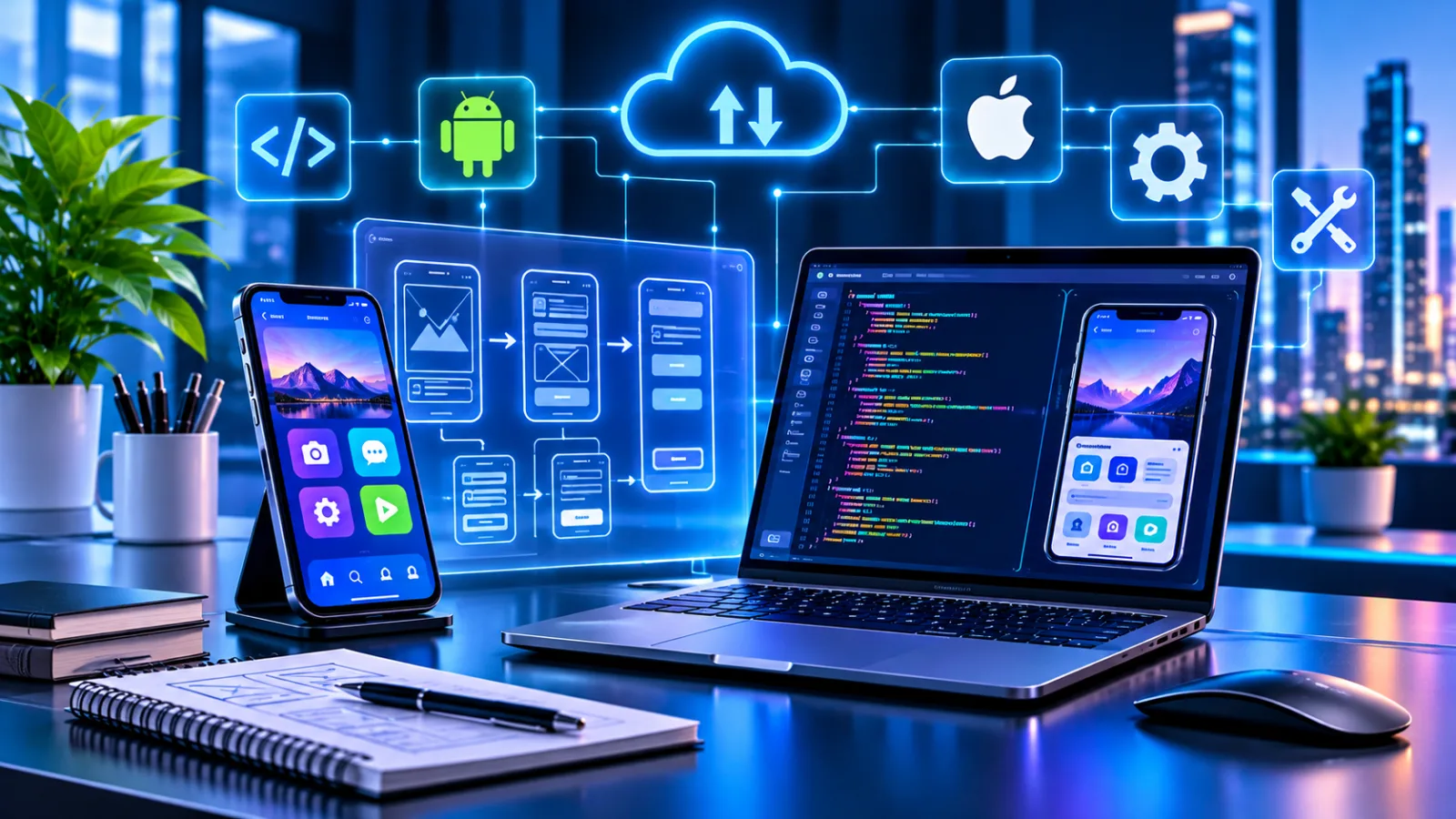
Types of App Developers You Can Hire
Before comparing companies, understand the different development models available. Each model offers advantages and limitations depending on the project's complexity and your internal resources.
Freelance App Developers
Freelancers are independent professionals who work on development projects.
Advantages:
May be suitable for smaller projects
Direct communication with the developer
Flexible engagement arrangements
Potentially lower initial costs
Limitations:
One person may not cover design, backend, testing, and deployment
Availability may vary
Project continuity may depend on a single individual
Complex projects may require additional specialists
Best suited for: Small applications, prototypes, limited features, or businesses with existing technical support.
App Development Agencies
An app development agency typically provides a coordinated team of professionals.
Advantages:
Access to multiple technical skills
Structured project management
Design, development, and testing capabilities
Defined project delivery processes
Limitations:
Costs may be higher than hiring an individual freelancer
Team structure and availability vary
Scope changes may require additional fees
Best suited for: Businesses requiring a complete development process with several technical components.
Dedicated Development Teams
A dedicated team works on a project over an extended period.
Advantages:
Continued development capacity
Flexible product roadmap
Greater collaboration with internal teams
Potentially suitable for ongoing product development
Limitations:
Requires effective management and communication
Long-term costs need to be considered
Responsibilities must be clearly defined
Best suited for: Startups and businesses building, expanding, or maintaining a digital product over time.
In-House App Developers
An in-house development team consists of employees working directly for the business.
Advantages:
Direct organizational involvement
Long-term institutional knowledge
Greater control over priorities
Close collaboration with internal departments
Limitations:
Recruitment and employment costs
Infrastructure and management requirements
Need to maintain several technical skills internally
Best suited for: Organizations with ongoing software development needs and sufficient resources to manage a technical team.
Essential Services Offered by Top App Developers
Professional app development companies may offer several services, depending on their expertise and engagement model.
Android App Development
Android applications are built for devices using the Android operating system.
Development may involve:
User interface and experience design
Native Android engineering
Device compatibility testing
API integration
Performance optimization
Security implementation
Google Play deployment preparation
Native Android development commonly uses Kotlin. The appropriate approach depends on application requirements and the development team's expertise.
iOS App Development
iOS applications are designed for Apple devices such as iPhones and iPads.
Development may involve:
Native iOS engineering
User interface design
Apple platform integrations
Device and operating system testing
Performance optimization
App Store submission preparation
Swift is a commonly used programming language for native iOS development.
Cross-Platform App Development
Cross-platform frameworks allow developers to share portions of the application code across multiple operating systems.
Popular options include:
Flutter
React Native
Cross-platform development may reduce duplicated implementation work and help teams maintain a more consistent experience.
However, the choice depends on performance requirements, platform-specific functionality, integrations, and long-term maintenance considerations.
UI/UX Design
User interface (UI) design focuses on how the application looks and presents information.
User experience (UX) design focuses on how users navigate the application and complete tasks.
A professional design process may include:
User research
User journey mapping
Wireframes
Interactive prototypes
Visual design systems
Usability testing
Accessibility considerations
A well-designed application should make important actions understandable and easy to complete.
Backend Development
The backend supports the functionality that users interact with through the mobile application.
It may include:
Server-side business logic
Database management
User authentication
API development
Notifications
Administrative dashboards
Payment integrations
Data processing
Reporting and analytics
Backend architecture should be designed according to the application's requirements, security needs, expected usage, and maintenance capabilities.
Application Maintenance and Support
After launch, applications require continued attention.
Maintenance may include:
Bug fixes
Security updates
Operating system compatibility
Performance monitoring
Infrastructure updates
Database maintenance
Feature enhancements
Technical support
Before hiring a development company, clarify what is included in the initial agreement and what will be charged separately.
How to Choose the Best App Development Company in 2026
Choosing a development partner requires a structured evaluation process. The following factors can help businesses compare companies more effectively.
1. Define Your Business Requirements
Start by identifying the problem your application needs to solve.
Ask yourself:
Who will use the application?
What problem will it address?
What actions should users be able to complete?
Which platforms are required?
Does the application need a backend?
Will it integrate with existing systems?
What is the initial budget?
What is the expected launch timeline?
Clear requirements help developers understand the project and prepare more accurate proposals.
2. Review the Company's Portfolio
A portfolio provides insight into the company's experience and capabilities.
Look for:
Applications with similar functionality
Relevant industry experience
Demonstrable live products
Technical complexity
Design quality
Evidence of the company's actual contribution
Do not rely only on screenshots or marketing descriptions. Ask whether you can test a live application or discuss a completed project with the team.
3. Evaluate Technical Expertise
The development team should be able to explain its technical decisions.
Ask about:
Native versus cross-platform development
Backend architecture
Database selection
API design
Cloud infrastructure
Security practices
Testing methodology
Scalability and maintainability
A strong technical recommendation should be based on your requirements rather than a company's preference for a particular framework.
4. Assess UI/UX Capabilities
An application should be intuitive, accessible, and designed around real user needs.
Review the team's design process and ask how it validates usability.
A confusing application can frustrate users even if the underlying technology is technically sound.
5. Understand the Development Process
A reliable development process should include clear communication and measurable milestones.
Ask potential developers:
How are requirements documented?
How frequently will progress be shared?
Can stakeholders review working features?
How are revisions managed?
How are delays or risks communicated?
What testing is performed before delivery?
A structured process helps businesses monitor progress and make decisions throughout development.
6. Check Security and Quality Assurance
Security and quality assurance should not be postponed until the application is almost complete.
Discuss authentication, authorization, secure data handling, dependency management, testing, and deployment.
For platform-specific guidance, review the official Android developer security documentation and Apple App Review Guidelines.
7. Compare Pricing and Scope
A quotation should clearly explain the services included.
Compare:
Discovery and planning
UI/UX design
Mobile development
Backend development
Integrations
Testing
Deployment
Documentation
Maintenance
The lowest quotation is not always the most economical option if essential services are excluded.
8. Confirm Ownership and Support
Before signing a contract, clarify:
Source-code ownership
Intellectual property rights
Repository access
Design ownership
Third-party licensing
Cloud and app-store account access
Documentation and handover
Maintenance responsibilities
These terms should be documented in the agreement.
Native vs. Cross-Platform App Development: Which Is Better?
One of the most important decisions when hiring app developers is selecting the appropriate development approach.
Factor | Native Development | Cross-Platform Development |
|---|---|---|
Codebase | Separate platform-specific code | Shared code for supported platforms |
Performance | Can be optimized for each platform | Depends on framework and implementation |
User experience | Platform-specific customization | Consistent experience with platform adaptations |
Development effort | May require separate teams | Can reduce duplicated implementation |
Maintenance | Separate platform codebases | Shared code plus platform-specific work |
Device integration | Direct platform capabilities | Depends on framework and plugins |
Suitable for | Specialized platform requirements | Many multi-platform business applications |
When Native Development Makes Sense
Native development may be suitable when:
The application requires advanced platform-specific capabilities.
Performance requirements are particularly demanding.
The product depends heavily on specialized device functionality.
Platform-specific user experiences are a priority.
When Cross-Platform Development Makes Sense
Cross-platform development may be suitable when:
Android and iOS versions are required.
The project benefits from shared code.
The feature set is supported by the chosen framework.
The team can maintain both platform experiences effectively.
The best decision should be made after reviewing the requirements, technical constraints, team expertise, and long-term maintenance plan.
How Much Does App Development Cost in 2026?
App development costs vary considerably depending on the features, design, technology, integrations, development team, and project location.
There is no single reliable price for every application.
Factors That Influence App Development Costs
Cost factor | How it affects the budget |
|---|---|
Application complexity | More workflows and features require additional development |
Number of platforms | Android, iOS, or both can affect implementation effort |
UI/UX design | Custom interfaces and extensive testing require additional work |
Backend development | APIs, databases, and server-side logic add complexity |
Third-party integrations | External services may involve development and recurring fees |
Security requirements | Sensitive data and business-critical functionality may require additional controls |
Testing | Device coverage and complex workflows increase QA effort |
Maintenance | Updates, monitoring, and support create ongoing costs |

Typical App Development Cost Categories
These are illustrative planning categories, not verified quotations or guaranteed market prices.
Project type | General scope |
|---|---|
Basic application | Limited functionality and straightforward user journeys |
MVP application | Core features designed to validate a business idea |
Mid-complexity application | Multiple workflows, backend services, and integrations |
Advanced application | Complex architecture, extensive integrations, and specialized functionality |
Enterprise application | Business-critical requirements, security, scalability, and operational support |
For an accurate estimate, request a detailed proposal based on your specific requirements.
What Should Be Included in an App Development Quote?
A professional proposal should clearly identify:
Project discovery and planning
Feature specifications
UI/UX design deliverables
Android and iOS scope
Backend and API requirements
Third-party integrations
Testing and acceptance criteria
Deployment and launch support
Source-code and ownership terms
Maintenance and support
Businesses should also consider recurring infrastructure, third-party subscriptions, app-store-related requirements, and future feature development.
App Development Trends to Consider in 2026
Technology continues to evolve, but not every emerging trend is necessary for every application.
Businesses should prioritize technology that provides meaningful value to their customers or operations.
1. AI-Powered Applications
AI can support features such as:
Personalized recommendations
Conversational interfaces
Automated customer support
Intelligent search
Document processing
Predictive insights
AI functionality should be introduced when it solves a specific problem. Businesses should also evaluate data quality, privacy, operating costs, and the reliability of AI-generated results.
2. Cloud-Based Application Architecture
Cloud infrastructure can support application deployment, storage, backend services, monitoring, and scaling.
The appropriate cloud architecture depends on expected workloads, availability requirements, security, and operational capabilities.
Businesses can explore cloud and DevOps solutions when considering infrastructure and deployment requirements.
3. Connected Digital Ecosystems
Applications increasingly operate alongside websites, administrative portals, CRM systems, ERP platforms, and other business software.
A connected ecosystem can reduce duplicated work and improve information flow.
4. Greater Focus on Application Security
Security is becoming an essential part of product development and maintenance.
Businesses should evaluate secure authentication, data protection, access controls, vulnerability management, and ongoing updates.
5. Personalization and User-Centered Design
Personalized experiences may help users find relevant content, services, or information more efficiently.
However, personalization should respect privacy, remain understandable, and provide genuine user value.
6. Continuous Product Improvement
Applications should be treated as evolving products rather than one-time projects.
Analytics, user feedback, testing, and performance monitoring can help teams identify opportunities for improvement after launch.
App Development for Businesses in Qatar
Businesses in Qatar may have additional requirements when planning mobile applications for local customers, employees, or business operations.
Arabic and English Language Support
Applications serving multilingual audiences may need Arabic and English interfaces.
Consider:
Right-to-left interface support
Language selection
Translation workflows
Text alignment
Navigation and form layouts
Localized dates and numbers
Testing in both languages
Arabic localization involves interface design and testing, not just translating words.
Local Business Integrations
Depending on the application, businesses may need integrations with:
Payment providers
Booking and reservation systems
CRM platforms
ERP software
Inventory management
Accounting systems
Customer communication services
Confirm the availability, technical requirements, and commercial terms of each third-party service before development begins.
Privacy and Data Protection
Businesses should determine what personal data their application collects, processes, stores, and shares.
Discuss applicable privacy requirements, data handling, security controls, and responsibilities with the development team. For sensitive or regulated applications, obtain appropriate professional guidance.
Industry-Specific Requirements
Different sectors may require different functionality.
Industry | Potential application features |
|---|---|
Healthcare | Appointment scheduling, patient communication, service information |
Retail | Product catalogues, orders, payments, loyalty programs |
Education | Learning resources, attendance, communication |
Real estate | Property listings, enquiries, scheduling |
Logistics | Delivery tracking, task management, status updates |
Hospitality | Reservations, customer services, booking management |
Professional services | Appointments, document access, customer portals |
A development team should understand the business context before recommending the final feature set.
Common Mistakes to Avoid When Hiring App Developers
Choosing a Company Based Only on Price
A low quotation may exclude important services such as testing, backend development, integrations, or maintenance.
Compare complete proposals rather than headline prices.
Starting Without Clear Requirements
Unclear requirements can lead to scope changes, delays, and additional costs.
Define the initial feature set and document the expected deliverables before development begins.
Ignoring User Experience
An application should be designed around users' needs and behavior.
Invest in research, prototyping, and usability testing instead of treating design as decoration.
Overlooking Backend Requirements
A mobile application may depend on databases, APIs, administrative systems, and business logic.
Make sure the complete technical solution is covered in the proposal.
Failing to Discuss Ownership
Clarify who owns the source code, designs, documentation, and project assets.
Ensure that access to essential repositories and accounts is addressed in the contract.
Ignoring Post-Launch Support
Applications need updates, monitoring, maintenance, and improvements.
Establish support arrangements before launch rather than waiting until problems arise.
Selecting Technology Without Understanding Its Trade-Offs
A popular framework is not automatically the best option.
Ask developers to explain how the recommended technology meets your requirements and supports long-term maintenance.
Questions to Ask Before Hiring an App Development Company
Before choosing a provider, consider asking the following questions:
Technical Questions
Which technology stack do you recommend, and why?
Have you developed applications with similar functionality?
How will the backend and database be structured?
What integrations will be required?
How will security be implemented?
What testing process will you follow?
How will the application be maintained?
Project Management Questions
Who will manage the project?
What are the proposed milestones?
How frequently will progress be reported?
How will changes to requirements be handled?
What happens if a milestone is delayed?
How will the final application be tested and approved?
Commercial Questions
What is included in the quotation?
Which services are excluded?
Are third-party costs included?
How are additional features priced?
Who owns the source code?
What maintenance is available after launch?
What documentation will be provided at handover?
A development company should be able to answer these questions clearly and professionally.
Why Consider Galaxium Coding for Your App Development Project?
Choosing an app development partner requires understanding your business objectives, technical requirements, and expected outcomes.
Galaxium Coding is a Qatar-based technology company offering software development and mobile application services for businesses exploring customized digital solutions.
Businesses can explore Galaxium Coding's mobile app development services to discuss application requirements, technical possibilities, and potential development approaches.
For projects requiring broader digital functionality, custom software development services may also be relevant.
Before discussing a project, consider preparing:
A clear description of your business problem
Your target audience
Essential application features
Required platforms
Existing software and integrations
Budget expectations
Preferred timeline
Maintenance and support requirements
This information helps establish a productive conversation about the application's scope, technical approach, and feasibility.
You can also explore Galaxium Coding's projects and portfolio to learn more about its technology work.
For a project-specific discussion, contact Galaxium Coding with your requirements.
Final Thoughts
Finding the top app developers in 2026 is not simply about choosing a company with a recognizable name or an impressive website.
The right app development company should understand your business, demonstrate relevant technical expertise, recommend appropriate technologies, communicate transparently, and provide a practical plan for delivering and maintaining your application.
Before making a final decision, compare several providers, review their portfolios, evaluate their proposed teams, clarify project scope, and establish ownership and support arrangements.
A well-planned development partnership can help turn your application idea into a reliable digital product that supports customer needs and long-term business objectives.
Frequently Asked Questions
1. Who are the top app developers in 2026?
The best app development companies depend on your requirements, budget, location, and project complexity. Companies worth researching include Appinventiv, Fueled, Intellectsoft, Zco, ArcTouch, Globant, ScienceSoft, OpenXcell, and JPLoft. Businesses in Qatar can also evaluate Galaxium Coding for customized mobile and software development requirements. Always verify relevant portfolios, references, and project terms.
2. How do I choose the best app development company?
Evaluate the company's technical capabilities, relevant portfolio, UI/UX expertise, communication practices, security approach, pricing transparency, source-code ownership, and post-launch support. Request a detailed proposal based on your requirements before making a decision.
3. How much does it cost to develop a mobile application in 2026?
The cost depends on features, design, platforms, backend architecture, integrations, testing, and maintenance. A simple application generally requires less development effort than a complex enterprise solution. Request a detailed quotation to understand the expected investment.
4. How long does it take to develop an app?
Development timelines depend on scope, technical complexity, integrations, team size, and testing requirements. A basic application may take weeks or months, while a complex product may require a longer development cycle. A phased roadmap can help establish realistic expectations.
5. Should I choose native or cross-platform app development?
Native development may be suitable for applications requiring advanced platform-specific functionality or specialized performance optimization. Cross-platform development may be useful when launching on multiple platforms with shared code. The right choice depends on the application's requirements and maintenance plans.
6. What services should an app development company provide?
Depending on the project, services may include discovery, UI/UX design, Android and iOS development, backend engineering, API integrations, testing, deployment, documentation, and ongoing maintenance. Confirm which services are included in the agreement.
7. Why is post-launch app maintenance important?
Applications need ongoing updates, security improvements, bug fixes, compatibility testing, performance monitoring, and feature enhancements. A clear maintenance plan helps protect the application's reliability and long-term usability.
8. Can app developers build customized applications for businesses in Qatar?
Yes. Businesses can work with development companies to create applications tailored to their workflows, customer needs, and operational requirements. Projects may include multilingual interfaces, payment integrations, business software connectivity, and industry-specific features, depending on the scope and available services.