How to Choose the Best Taxi App for Your Daily Travel
Compare taxi booking features, fares, and ride availability to choose an app that suits your daily travel needs.
How to Choose the Best Taxi App for Your Daily Travel
Choosing the best taxi app for daily travel can make your commute more convenient, predictable, and comfortable. Whether you travel to work, attend meetings, visit clients, go shopping, or need an airport transfer, the right app can help you book a ride, check the estimated fare, follow your driver's arrival, and manage your journey from your smartphone.
However, not every taxi app offers the same experience. Some prioritize affordability, while others focus on quick pickups, premium vehicles, scheduled rides, cashless payments, or additional safety features. The best choice depends on your location, travel routine, budget, and personal requirements.
For commuters in Qatar, for example, the available choices should be evaluated against local service coverage and official authorization. Karwa provides app-based taxi and limousine booking, while other licensed ride-hailing providers may offer different vehicle options and booking experiences. The Qatar Ministry of Transport publishes information about companies authorized to provide passenger transportation through electronic applications.
This guide explains how to evaluate a taxi app, which features matter most, how to compare costs, and what to check before booking your next ride.
What Is a Taxi App?
A taxi app is a mobile application that connects passengers with taxi or ride-hailing services. Instead of relying entirely on street-hailing or telephone bookings, users can request transportation through a smartphone.
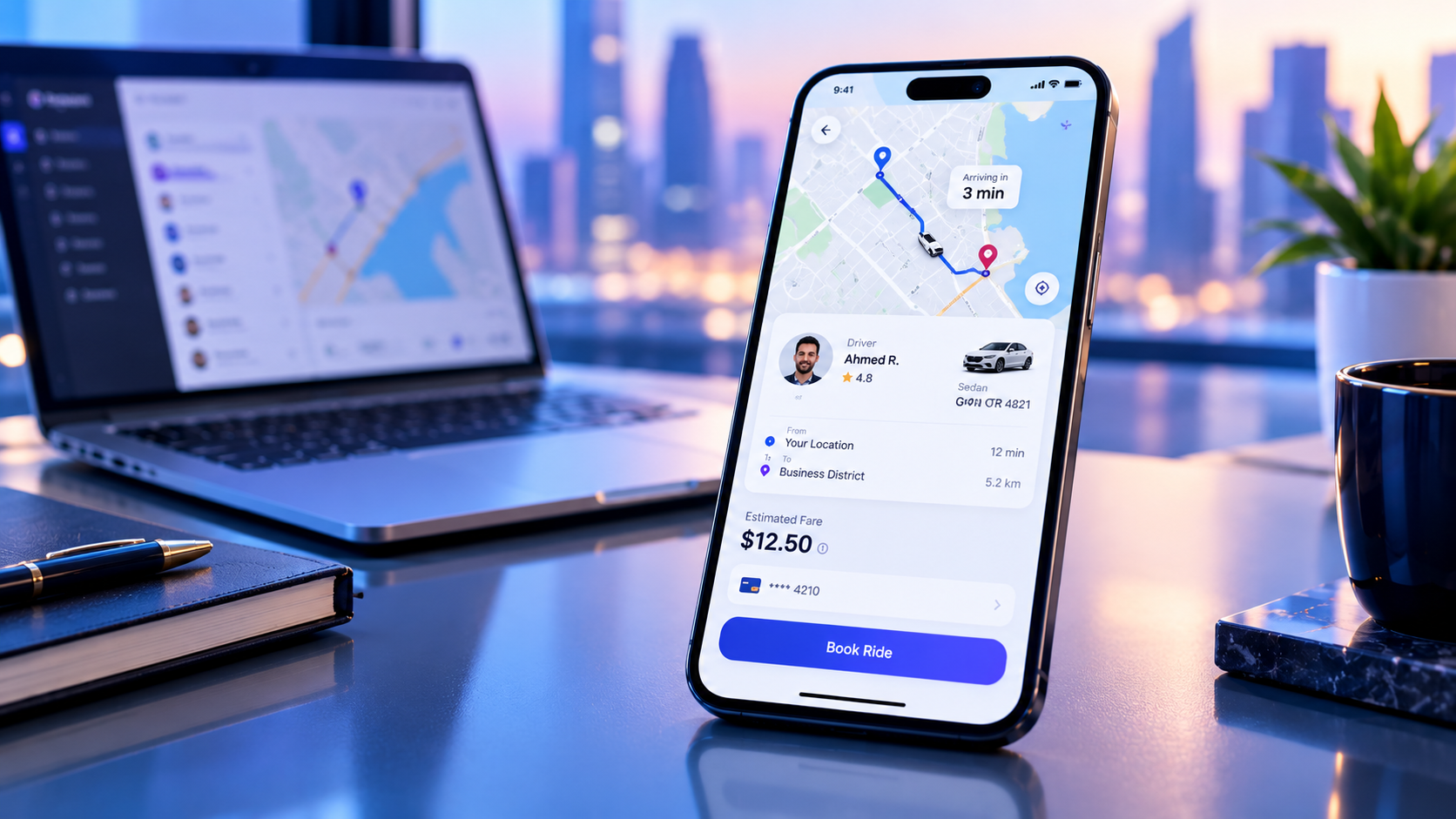
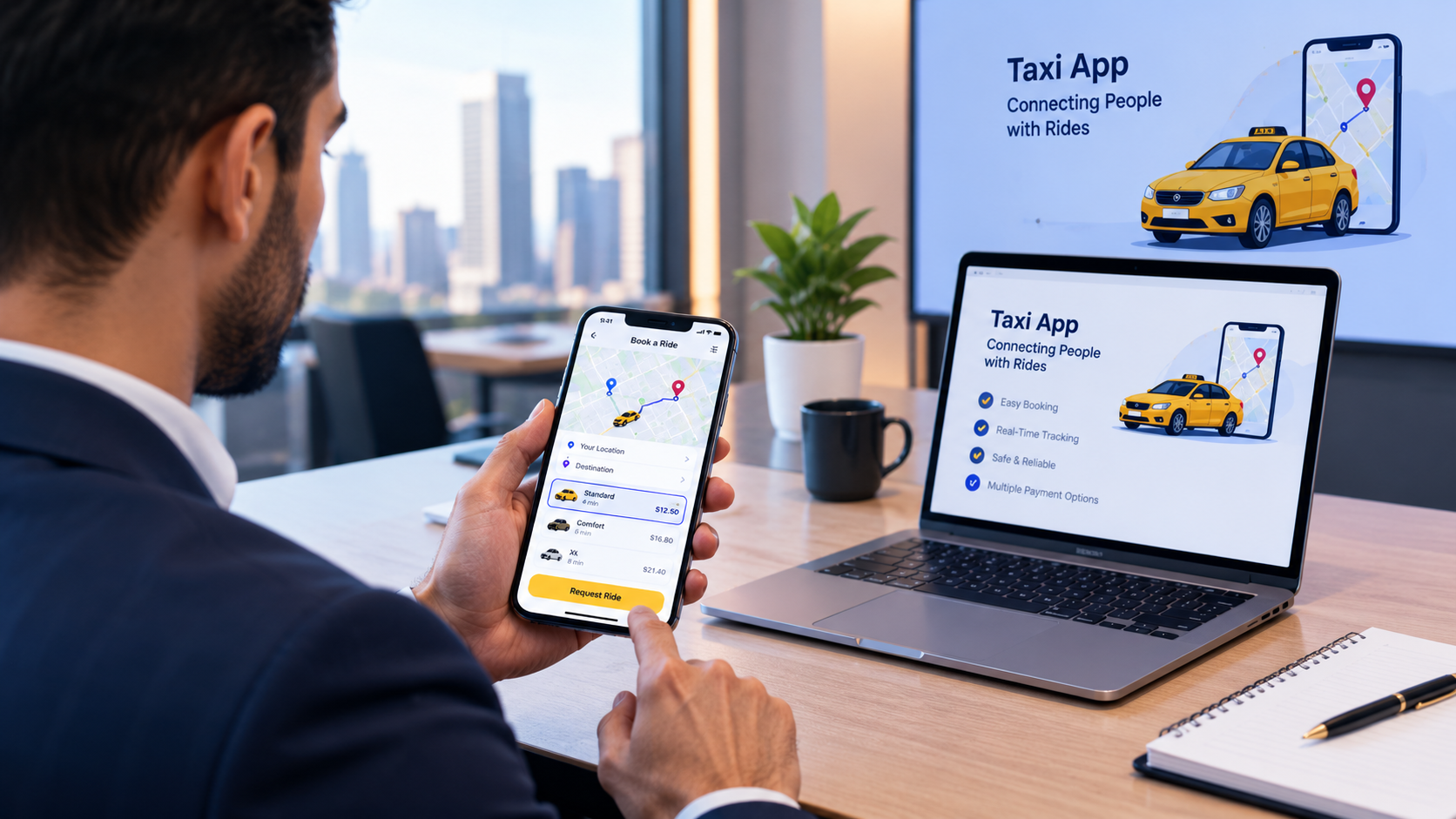
A typical taxi app allows passengers to:
Enter their pickup and destination locations.
View available ride categories.
Check estimated fares and arrival times.
Request an immediate ride or schedule a pickup when supported.
View driver and vehicle details.
Track the assigned vehicle.
Pay using supported payment methods.
Review previous trips and rate the service.
Behind the interface, the app communicates with mapping services, driver systems, booking software, payment providers, and databases to coordinate the journey.
For regular commuters, this can reduce the effort involved in arranging transportation. For businesses, digital taxi booking can also make employee travel and customer transportation easier to manage.
Why Choosing the Right Taxi App Matters
A taxi app is not simply a convenient way to book a vehicle. It can influence how much you spend, how long you wait, and how confidently you manage your daily schedule.
1. Better Control Over Travel Costs
An app that displays an estimated fare before booking helps you understand the likely cost of a journey. Some services offer upfront pricing, while others calculate the final amount using a meter or applicable fare rules.
Checking the fare before confirming a ride can help you compare options and avoid choosing a service that exceeds your budget.
2. More Convenient Daily Commuting
A reliable app makes it easier to book rides from frequently used locations, such as your home, office, or a nearby transport station.
Saved addresses, previous bookings, and scheduled pickups can be especially helpful if you follow the same route every day.
3. Improved Journey Visibility
Vehicle tracking and driver details help passengers identify their assigned ride and follow its arrival.
These features are useful when meeting a driver in a busy shopping area, outside an office building, or near an airport entrance.
4. More Flexible Payment Options
Depending on the service and market, taxi apps may support credit or debit cards, digital wallets, cash, or other local payment methods.
Choosing an app with a payment option you can use comfortably makes the booking process simpler.
5. Greater Convenience for Different Travel Needs
A daily commuter may need an affordable standard ride, while a family may require more passenger space and an airport traveler may need room for luggage.
The right taxi app should offer suitable ride categories or clearly explain the available alternatives.
10 Factors to Consider When Choosing the Best Taxi App
Before downloading or regularly using a taxi app, evaluate the following factors.
1. Check Availability in Your Area
The first requirement is service coverage. An app may be popular internationally but have limited drivers or no active service in your particular city or neighborhood.
Check whether the service operates in the places you visit most often, including:
Your home and workplace.
Shopping centers and business districts.
Airports and transport stations.
Residential neighborhoods outside the city center.
Areas you visit during evenings or weekends.
If you travel between cities, check whether the app supports both your starting point and destination.
For users in Qatar, the Ministry of Transport's official information about licensed passenger-transport applications is a useful starting point. Authorization and actual service availability are different questions, so confirm that the provider is currently operating in your area.
2. Compare Fare Estimates and Pricing Rules
Price is an important factor for anyone who books rides regularly. However, the cheapest displayed estimate is not always the best overall value.
Taxi fares may depend on:
Distance traveled.
Estimated journey duration.
Traffic conditions.
Demand at the time of booking.
Vehicle category.
Waiting time.
Airport or other location-specific charges.
Applicable tolls, fees, or taxes.
Some apps display an upfront fare, while metered services calculate the final cost according to their applicable tariff.
Before confirming a booking, check whether the displayed amount is an estimate or a fixed upfront price. Review any applicable extra charges and cancellation rules.
Practical tip: Compare the same pickup and destination across two or more available services. Check them at approximately the same time because estimates can change with traffic, demand, and driver availability.
3. Evaluate Driver Availability and Pickup Time
A taxi app is only useful for daily commuting if it can provide a ride when you need one.
Check the estimated arrival time before booking. If you regularly travel during morning rush hour, late at night, or on weekends, consider how well the app serves those periods.
Useful indicators include:
Estimated driver arrival time.
Number of available vehicle categories.
Ability to schedule a ride in advance.
Notifications when a driver is assigned.
Options to rebook if a driver cancels.
Remember that an estimated arrival time is not a guarantee. Traffic, weather, road closures, and sudden changes in demand can affect the actual pickup.
If you have an important meeting or flight, leave a reasonable time buffer rather than relying on the shortest displayed estimate.
4. Look for Practical Safety Features
Safety should be a priority when choosing a taxi app, especially for frequent commuters, solo travelers, and people traveling at night.
Look for features such as:
Driver and vehicle identification before pickup.
Trip details that can be shared with a trusted contact.
In-app emergency or safety assistance, where available.
A clear process for reporting incidents.
Support channels for lost items or trip-related problems.
Access to trip history and booking receipts.
Feature availability differs by provider and location. Review the app's current safety information instead of assuming every service provides the same tools.
Before entering a vehicle, verify the registration number, vehicle model, and driver information shown in the app. Do not get into a vehicle if the details do not match your booking.
Also review the provider's privacy policy to understand how it handles location information and personal data.
5. Check Payment Methods
Your preferred payment method should be supported before you make the app part of your daily routine.
Depending on the provider and country, payment options may include:
Cash.
Credit or debit cards.
Mobile wallets.
In-app balances.
Corporate billing or business travel arrangements.
Check whether a payment method must be added before booking and whether cash payments are available for your selected ride category.
For regular work travel, digital receipts can make it easier to track expenses and submit reimbursement claims.
Never assume that every payment method is available in every country or for every vehicle category.
6. Evaluate the App's User Experience
A good taxi app should make booking straightforward. You should be able to enter a destination, review the ride details, and confirm the booking without unnecessary confusion.
Look for:
Clear pickup and destination fields.
Accurate address suggestions.
Easy-to-read fare information.
A simple vehicle-selection screen.
Clear confirmation and cancellation messages.
Useful notifications.
An interface that works well on your device.
Location accuracy is particularly important in large buildings, shopping malls, airports, and areas with multiple entrances.
If you frequently book rides from the same place, test whether the app allows you to save the correct pickup point rather than relying on a broad street address.
7. Review Vehicle Options and Accessibility
Your transportation needs may change from one journey to another.
A standard vehicle may be sufficient for a short commute, while another journey may require extra luggage space, a larger vehicle, or accessibility features.
Before booking, check whether the app offers:
Standard or economy rides.
Larger vehicles for groups or luggage.
Premium or chauffeur services.
Accessible transportation, where available.
Vehicle preferences or special assistance options.
Do not assume that a vehicle category guarantees a particular model or level of accessibility. Confirm the details with the provider when your needs are specific.
8. Check Customer Support and Cancellation Policies
Problems can occur even when an app is well designed. A driver may cancel, a payment may fail, or you may leave an item in a vehicle.
Before relying on a service, find out how to contact support and how complaints are handled.
Review the following:
Driver cancellation procedures.
Passenger cancellation fees.
Refund and fare-dispute processes.
Lost-property reporting.
Customer support availability.
Procedures for reporting a safety concern.
A transparent support process is valuable because it gives you a clear next step when something goes wrong.
9. Read Reviews Carefully
App-store reviews can reveal recurring usability problems, payment issues, location inaccuracies, or customer support concerns.
However, a single positive or negative review should not determine your decision.
When evaluating reviews, look for patterns across recent feedback. Pay attention to comments about the features that matter most to your travel routine.
For example, a commuter who travels early every morning may care more about driver availability than a user who books a taxi only occasionally.
Also check whether the developer regularly updates the app and addresses reported technical problems.
10. Consider Your Long-Term Travel Needs
The best taxi app should fit your routine rather than simply provide a ride once.
Ask yourself:
Do I travel at the same time every day?
Do I need to book rides in advance?
Do I often travel to airports or business districts?
Do I need electronic receipts?
Do I regularly carry luggage or travel with family?
Do I need a consistent payment method?
Is the app available in all the locations I visit?
Your answers will help you prioritize the features that provide genuine value instead of paying attention to unnecessary extras.
Important Features Every Good Taxi App Should Offer
A practical taxi app should make the complete journey easier to manage.
Feature | Why It Matters |
|---|---|
GPS and location search | Helps passengers set accurate pickup and drop-off points. |
Fare estimate or upfront pricing | Makes it easier to understand likely travel costs. |
Driver and vehicle details | Helps passengers verify the assigned ride. |
Live vehicle tracking | Shows the assigned vehicle's progress when supported. |
Multiple payment methods | Provides flexibility for different users. |
Booking history | Makes it easier to review previous journeys and receipts. |
Notifications | Keeps passengers informed about booking status. |
Customer support | Provides a route for resolving problems. |
Ratings and feedback | Helps users share their experiences. |
Scheduled bookings | Supports planned journeys when the provider offers this option. |
For frequent commuters, a smaller set of dependable features is often more useful than an app filled with functions they rarely use.
How to Compare Taxi Apps Before Booking
Instead of choosing an app based only on advertising or popularity, compare the services against your actual travel requirements.
Use this simple process:
Step 1: Identify Your Most Common Routes
List the journeys you make regularly, such as home to work, work to a client meeting, or home to the airport.
Step 2: Check Local Availability
Confirm that each candidate service operates on those routes and at the times you need.
Step 3: Compare Similar Fare Estimates
Enter the same pickup and destination into each app. Compare the displayed prices and read the applicable pricing terms.
Step 4: Check Pickup Estimates
Compare estimated arrival times, especially during your usual commuting hours.
Step 5: Review Safety and Support
Confirm the availability of driver details, trip-sharing options, safety assistance, and customer support.
Step 6: Test the Booking Experience
Explore the interface, location search, payment process, and booking notifications before making the app your regular option.
Step 7: Review Your Experience
After several journeys, consider the actual pickup times, fare accuracy, comfort, payment experience, and ease of resolving problems.
This process helps you make a decision based on real requirements rather than relying on a single feature or review score.
Taxi Apps in Qatar: What Should Daily Commuters Consider?
Qatar provides a useful example of why local availability and official authorization matter when choosing a taxi app.
The country's transport options include Karwa and other ride-hailing providers. The Qatar Ministry of Transport publishes information about licensed companies, including services listed as active in Qatar. Check the latest official information because authorization and operational status can change.
Karwa Official
Karwa's official app supports taxi and limousine bookings in Qatar. Its published app information lists features including estimated fares, immediate and advance bookings, vehicle tracking, driver notifications, electronic bills, and supported digital payments.
You can review the app's current features on the Karwa Official Google Play listing or through Mowasalat's official website. Availability and individual features should be confirmed in the current app.
Other Licensed Ride-Hailing Providers
Other companies may provide different booking processes, vehicle categories, or payment arrangements.
Before using an alternative service, check:
Whether it is currently operating in your area.
Which vehicle categories are available.
How fares are calculated.
Whether scheduled rides are supported.
Which payment methods are accepted.
What safety and support features are available.
Do not assume that an app authorized to operate nationally has drivers available in every neighborhood or at every hour.
Consider Traffic, Pickup Points, and Travel Time
For Doha commuters, the exact pickup point can make a significant difference to the booking experience.
A clear building entrance, designated taxi pickup area, or recognizable landmark can help reduce confusion between the passenger and driver.
When traveling to an airport, hotel, event venue, or large shopping center, allow extra time for locating the correct pickup point and reaching the vehicle.
Common Mistakes to Avoid When Choosing a Taxi App
Even a highly rated app may not be the right choice for every passenger.
Choosing Only by the Lowest Price
A low fare estimate may be attractive, but pickup time, cancellation policies, vehicle suitability, and support also matter.
Compare the complete journey rather than looking only at the displayed price.
Ignoring Local Availability
An app that works well in one city may offer limited service elsewhere. Confirm availability before depending on it for an important journey.
Overlooking Additional Charges
Read the pricing information and check for applicable waiting fees, cancellation charges, tolls, or other extras.
Failing to Verify the Driver and Vehicle
Always compare the vehicle details with the information in your booking before entering the car.
Not Checking Cancellation Rules
Understand what happens if you cancel after a driver has been assigned or if the driver cancels the booking.
Sharing Too Much Personal Information
Use the information required by the service and review its privacy settings. Avoid sharing account credentials, payment details, or unnecessary personal information with anyone claiming to represent the driver or provider.
Depending on One App for Every Situation
Keeping a second legitimate option available may be useful when your primary service has limited availability. Confirm that both services are suitable for your location and needs.
How Technology Is Improving Taxi Booking Apps
Taxi apps combine several technologies to make ride booking more efficient.
GPS and Mapping
Location technology helps passengers select pickup points, gives drivers directions, and supports vehicle tracking when available.
Real-Time Notifications
Notifications inform users about driver assignment, vehicle arrival, booking changes, and trip completion.
Digital Payments
Payment integrations allow supported transactions to take place within the app and can make expense records easier to manage.
Data-Driven Matching
Ride-hailing systems may use location, driver availability, and trip information to match passengers with suitable drivers. The actual matching process varies between providers.
Better User Interfaces
Clearer booking screens, saved destinations, improved address search, and more accessible controls can reduce friction during everyday use.
These capabilities depend on the provider's systems and implementation. An app should be judged by how well its features work in practice, not simply by the technologies it advertises.

What Businesses Can Learn From Taxi App Design
Taxi apps also offer useful lessons for businesses developing their own mobile applications.
A successful service needs more than a polished interface. It must coordinate users, bookings, payments, notifications, and operational systems reliably.
For example, a company developing a delivery or appointment-booking app may need location services, customer accounts, scheduling, payment integration, and an administrative dashboard.
Businesses planning a similar digital product can explore mobile application development services from Galaxium Coding to understand how a custom application can be designed around specific user and operational requirements.
For more complex systems, custom software development services may help connect the mobile experience with business processes and existing systems.
The important principle is to begin with the user's problem, identify the essential features, and build a dependable experience around them.
Final Thoughts
Choosing the best taxi app for daily travel requires more than downloading the most popular option. You should compare local availability, pricing, pickup times, safety features, payment methods, vehicle options, customer support, and the overall booking experience.
Start by identifying your most common routes and travel requirements. Compare available services using the same journey details, review their current features, and evaluate how reliably they serve you over time.
For commuters in Qatar, checking official licensing information and confirming current local availability are particularly important steps.
The right taxi app is the one that fits your daily routine, provides clear booking information, and helps you travel with greater convenience and confidence.
If your business is planning a mobile platform with booking, location tracking, payments, or other connected features, contact Galaxium Coding to discuss your software development requirements.
Frequently Asked Questions (FAQs)
1. How do I choose the best taxi app for daily travel?
Compare local availability, fare estimates, pickup times, safety features, payment options, vehicle categories, customer support, and recent user reviews. Choose the service that best fits your regular routes and budget.
2. Which features should a taxi app have?
Useful features include location search, fare information, driver and vehicle details, vehicle tracking, notifications, payment options, trip history, customer support, and booking management.
3. Is the cheapest taxi app always the best option?
No. A lower fare may not offer the best overall value if the service has long pickup times, limited availability, unsuitable vehicles, or unclear cancellation policies. Compare the complete journey.
4. How can I check whether a taxi app is safe?
Review the provider's safety information and check for driver identification, vehicle details, trip-sharing options, emergency assistance where available, and a clear incident-reporting process. Verify the vehicle before entering it.
5. Can I schedule a taxi ride in advance?
Some taxi apps support advance reservations, while others focus on immediate bookings. Check the selected service's current features and confirm the reservation details before relying on it for an important trip.
6. Which taxi app should I use in Qatar?
Karwa is one option for taxi and limousine bookings in Qatar. Other licensed ride-hailing providers may also operate in the country. Check the latest Ministry of Transport information and confirm service availability, fares, and features for your location.
7. How can I compare taxi fares accurately?
Enter the same pickup and destination into each available app at approximately the same time. Compare upfront prices or estimates, vehicle categories, possible additional charges, and cancellation terms.
8. Are taxi apps suitable for daily commuting?
Yes. They can be useful for commuting when local service availability, cost, and pickup times suit your routine. Saved locations, booking history, and advance reservations can make repeat journeys easier.
9. Do taxi apps accept cash and digital payments?
Payment options vary by provider, country, and ride category. Check the available payment methods in the app before booking.
10. Why is location accuracy important in a taxi app?
Accurate pickup and drop-off points help passengers and drivers find one another, reduce confusion, and make it easier to complete a booking. This is especially useful around airports, malls, and large buildings.
11. Can businesses develop their own taxi booking app?
Yes. A custom taxi booking platform can include passenger and driver applications, GPS tracking, booking management, payments, notifications, and an administrative dashboard. The required features depend on the business model and operating requirements.
12. What should I check before making a taxi app my regular choice?
Test it on your common routes, compare fares and pickup estimates, review the safety features, verify payment options, and assess how the provider handles cancellations and customer support. Use your actual experience to decide whether it suits your daily needs.