How Much Does a Delivery App Cost to Build in 2026? Complete Cost Guide
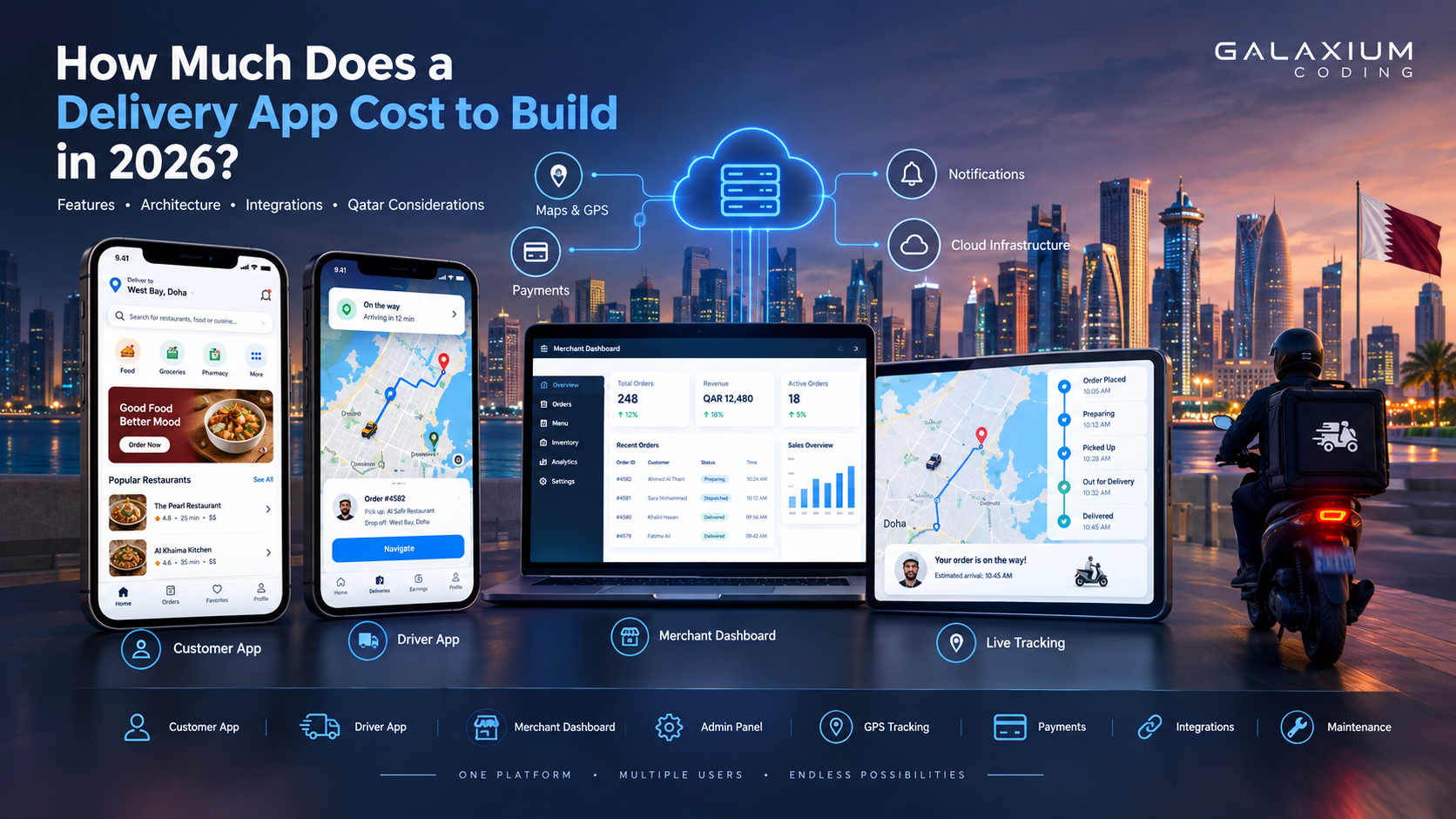
A modern delivery platform connects customers, drivers, merchants, GPS services and business systems through one digital ecosystem
How Much Does a Delivery App Cost to Build in 2026?
Building a delivery app can cost anywhere from a relatively small investment for a basic ordering MVP to a much larger investment for a complete multi-sided delivery platform with customer apps, driver applications, restaurant or merchant dashboards, live GPS tracking, payments, dispatch automation, notifications, analytics, and an administrative control panel.
The important point is that there is no single delivery app development cost.
A simple application that allows customers to place an order and receive a delivery notification is fundamentally different from a platform that manages thousands of orders, assigns drivers automatically, calculates delivery fees, tracks vehicles in real time, processes payments, manages merchants, and connects with business systems.
For businesses planning a delivery platform in Qatar or another market, understanding the individual components behind the cost is more useful than looking for one fixed price.
A delivery platform may include:
Customer mobile application
Driver or courier mobile application
Merchant or restaurant application
Web-based administration panel
Backend and database
Order management
Payment integration
GPS and maps
Real-time delivery tracking
Push notifications
Driver assignment
Delivery-zone management
Promotions and coupons
Ratings and reviews
Customer support
Analytics and reporting
Security and authentication
Cloud infrastructure
Ongoing maintenance
Businesses that need a system designed around their own operational workflows can also explore custom software development alongside mobile development.
How Much Does a Delivery App Cost?
A practical way to estimate the cost is to divide delivery applications into three broad levels:
Delivery platform type | Typical scope | Relative development complexity |
|---|---|---|
Basic MVP | Customer ordering, basic backend, simple admin panel | Low to moderate |
Professional delivery platform | Customer + driver apps, payments, GPS, notifications, dashboards | Moderate to high |
Advanced delivery ecosystem | Customer + driver + merchant apps, live tracking, dispatch, analytics, integrations and automation | High |
These are scope categories rather than fixed quotations. Actual development cost depends on the number of platforms, screens, workflows, integrations, design requirements, security controls, backend architecture, and post-launch support.
A delivery app with 20 straightforward screens may cost considerably less to develop than a platform with 60 screens and complicated real-time workflows.
That is why a reliable quotation should be based on requirements rather than simply the phrase "delivery app."
What Is a Delivery App?
A delivery app is a digital platform that connects customers, businesses and delivery personnel through software.
The customer may use the application to:
Browse products or services
Select items
Place an order
Pay online or choose another payment method
Enter a delivery address
Track an order
Receive notifications
Contact support
Rate the experience
The business may use a dashboard or application to:
Receive orders
Confirm orders
Manage products
Manage prices
View customers
Monitor deliveries
Manage drivers
Review revenue
Configure delivery zones
The driver may use a separate application to:
Receive delivery assignments
Accept or reject jobs
Navigate to pickup locations
Confirm pickup
Navigate to customers
Update delivery status
Contact customers
Confirm delivery
View earnings or completed jobs
Behind all of these interfaces is a backend system responsible for authentication, databases, APIs, order processing, notifications, payments, location data and business rules.
That makes a serious delivery platform much more than a mobile application.
It is a connected software ecosystem.
The Main Components of a Delivery Platform
Before calculating cost, it helps to understand what you are actually building.
1. Customer App
The customer application is usually the most visible component.
Typical features include:
Registration and login
Phone or email verification
Customer profile
Address management
Product or restaurant discovery
Search
Categories
Product details
Shopping cart
Checkout
Payment
Order history
Delivery status
Live tracking
Notifications
Ratings
Customer support
Promotions
Favorites
The number and complexity of these features directly affect development effort.
2. Driver App
A driver application introduces another set of workflows.
A courier may need to:
Receive a delivery request.
Accept the assignment.
Navigate to the pickup location.
Confirm pickup.
Navigate to the customer.
Update the delivery status.
Confirm completion.
The application may also need:
Driver registration
Identity verification
Availability status
GPS tracking
Route navigation
Delivery history
Earnings
Performance metrics
Notifications
Customer communication
Proof of delivery
Real-time location functionality can increase technical complexity because the system must process location updates reliably without unnecessarily consuming battery, bandwidth or server resources.
3. Merchant or Restaurant App
If the platform serves multiple restaurants, shops or businesses, merchants may require their own interface.
Features can include:
Merchant registration
Store profile
Product management
Inventory
Pricing
Order acceptance
Order preparation status
Promotions
Opening hours
Delivery configuration
Sales reports
Customer information
A merchant dashboard can be particularly important for marketplace-style delivery platforms.
4. Admin Dashboard
The administrative system provides centralized control.
An administrator may need to manage:
Customers
Drivers
Merchants
Orders
Payments
Refunds
Delivery zones
Commissions
Promotions
Complaints
Notifications
Reports
User permissions
System configuration
A simple dashboard is relatively straightforward.
A sophisticated operations dashboard is not.
For example, a logistics company may want to see active drivers on a map, delayed orders, delivery zones, average delivery time and operational alerts in real time.
That requires considerably more backend and interface work.
What Features Increase Delivery App Development Cost?
The biggest cost differences usually come from functionality.
1. Real-Time GPS Tracking
Live delivery tracking is one of the most recognizable delivery-app features.
A customer might see:
Order confirmed → Preparing → Picked up → Driver nearby → Delivered
To support this experience, the application may need:
GPS coordinates
Location permissions
Background location processing
Mapping services
Route information
Location APIs
Real-time backend communication
Driver status updates
Map providers commonly charge according to usage. For example, Google Maps Platform uses pay-as-you-go pricing based on billable events, with different pricing depending on the service and usage volume.
That means maps are not necessarily a one-time development expense. They can become an ongoing operating cost.
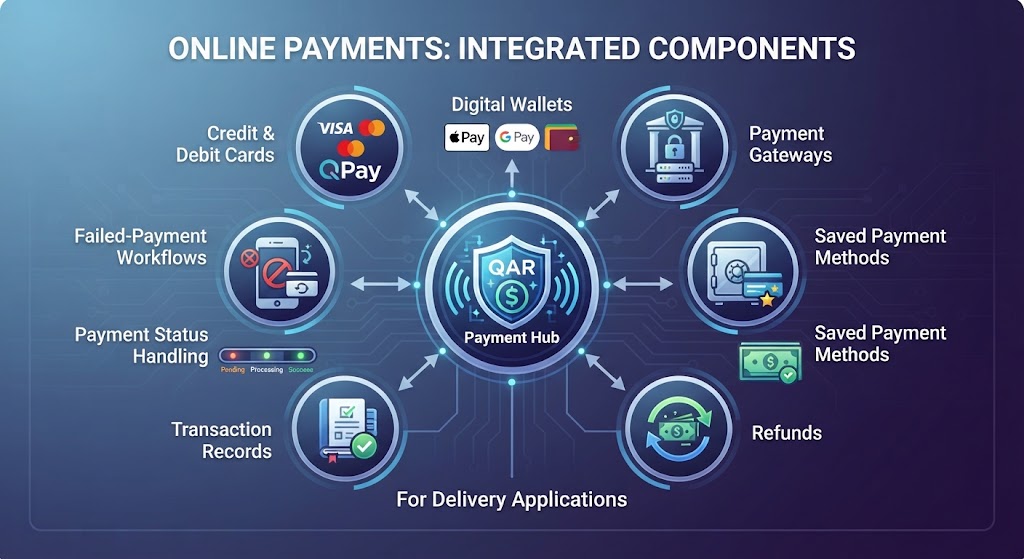
2. Online Payments
Payment integration can include:
Credit and debit cards
Digital wallets
Payment gateways
Saved payment methods
Refunds
Transaction records
Payment status handling
Failed-payment workflows
The development complexity depends on the selected payment provider and the required payment flows.
A delivery platform should also carefully separate the development cost from the transaction fees charged by payment providers.
3. Automated Driver Assignment
A basic system might allow an administrator to manually assign drivers.
A more advanced system can automatically determine which driver should receive an order.
The logic could consider:
Driver availability
Distance
Current workload
Delivery zone
Vehicle type
Estimated travel time
Order priority
Driver status
As these rules become more sophisticated, backend development becomes more complex.
4. Push Notifications
Customers and drivers may receive notifications for:
New orders
Order confirmation
Order preparation
Driver assignment
Pickup
Driver arrival
Delivery completion
Promotions
Notifications appear simple to users, but reliable notification workflows require backend event handling and platform-specific configuration.
5. Multiple Languages
A Qatar-focused delivery platform may need multilingual support depending on its audience.
Supporting multiple languages can affect:
UI design
Content management
Database structure
Notifications
Search
Product information
Customer support
Testing
If right-to-left languages are required, the interface should also be designed and tested accordingly rather than simply translating text after development.
Delivery App Development Cost by Feature
A useful way to think about the budget is by functional area.
Feature | Cost impact |
|---|---|
Customer registration | Low |
Product catalogue | Low–moderate |
Shopping cart | Moderate |
Checkout | Moderate |
Payment integration | Moderate |
GPS tracking | Moderate–high |
Real-time tracking | High |
Driver application | Moderate–high |
Merchant application | Moderate–high |
Admin dashboard | Moderate–high |
Automated dispatch | High |
Multiple payment methods | Moderate–high |
Loyalty system | Moderate |
Promotions | Moderate |
Advanced analytics | Moderate–high |
AI recommendations | High |
Route optimization | High |
ERP/CRM integration | High |
Multi-branch management | High |
Real-time chat | Moderate–high |
The exact cost depends on how each feature is implemented.
For example, "GPS" could mean displaying a static location on a map, or it could mean continuous driver tracking, route calculations, geofencing and automated arrival detection.
Those are very different technical requirements.
MVP vs Full Delivery App
One of the most effective ways to control initial development cost is to separate the project into versions.
Delivery App MVP
An MVP could contain:
Customer registration
Product browsing
Cart
Checkout
Order placement
Basic payment integration
Driver application
Basic delivery status
Admin dashboard
Push notifications
This allows a business to launch the core operation without immediately building every advanced feature.
Version 2
Once the basic platform is operational, the next version might introduce:
Live GPS tracking
Promotions
Ratings
Loyalty
Merchant dashboards
Advanced reporting
Driver earnings
Automated dispatch
Version 3
A mature platform could eventually add:
AI recommendations
Route optimization
Demand forecasting
Dynamic delivery pricing
Advanced analytics
Multi-branch management
ERP integration
CRM integration
Automated customer support
Business intelligence
This staged approach can make the initial investment easier to manage while leaving room for expansion.
Galaxium Coding's existing guidance similarly emphasizes defining requirements and development scope before creating a detailed software quotation.
What Technology Is Used to Build a Delivery App?
The technology stack depends on the requirements.
A modern delivery platform commonly contains several layers.
Mobile Applications
The customer and driver applications can be developed for:
Android
iOS
Or both
Businesses may choose native development or cross-platform technologies depending on requirements, performance needs, team expertise and long-term maintenance considerations.
Galaxium Coding provides mobile application development for businesses that need custom mobile experiences.
Backend
The backend manages:
Users
Orders
Drivers
Merchants
Payments
Products
Locations
Notifications
Business rules
APIs
The backend is often one of the most important parts of the platform because every mobile application depends on it.
Database
The database may store:
Customer information
Orders
Products
Driver information
Locations
Payment records
Delivery statuses
Ratings
Promotions
Analytics data
Database architecture should be designed for the expected scale rather than only for the first few hundred users.
APIs
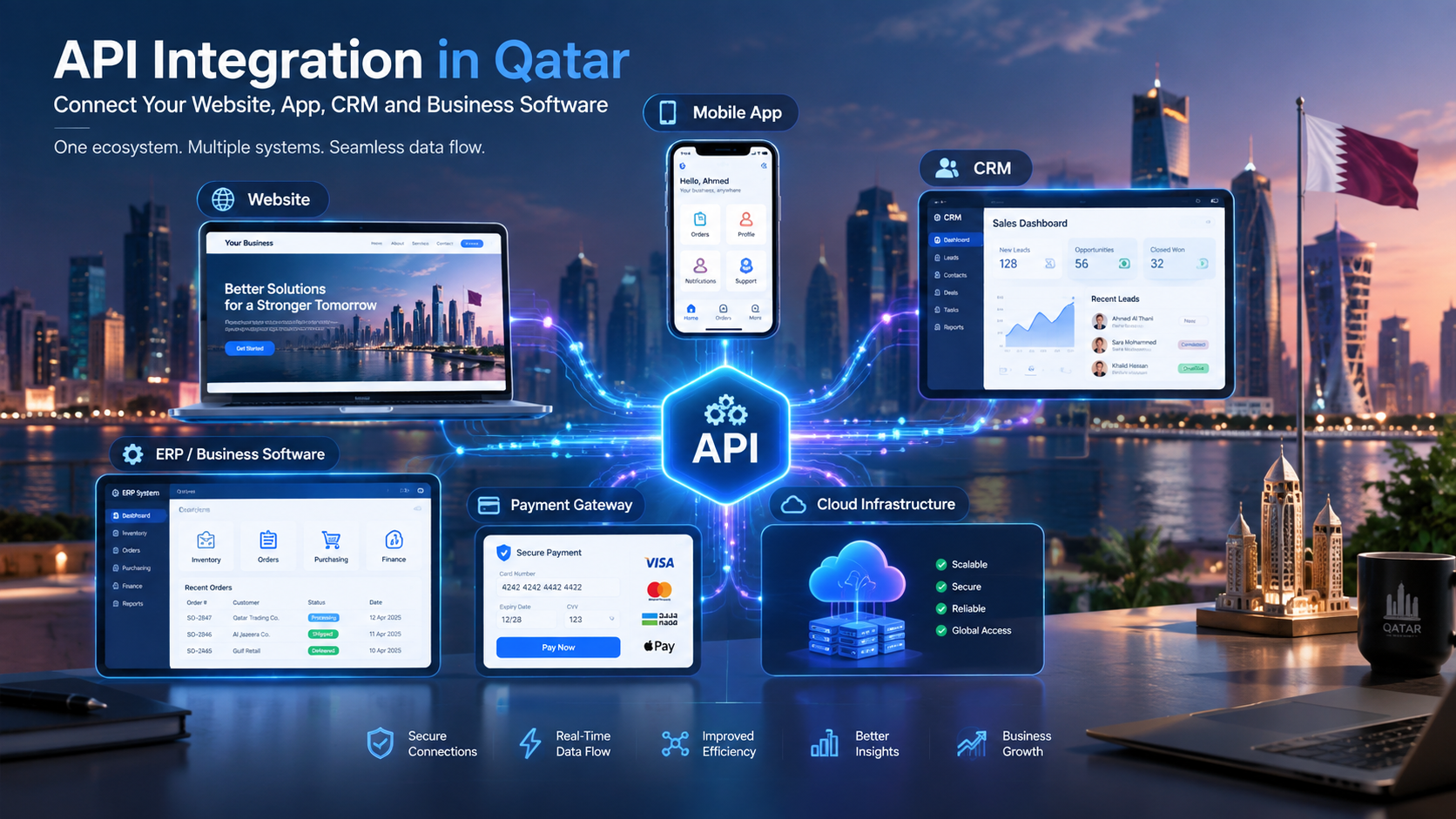
APIs allow different parts of the system to communicate.
For example:
Customer App → API → Backend → Database
and:
Driver App → API → Backend → Customer App
External APIs may also connect:
Maps
Payments
SMS
Email
CRM
ERP
Accounting
Analytics
Customer support
How Much Does a Delivery App Cost in Qatar?
For businesses in Qatar, the development cost still depends primarily on scope rather than simply the country in which the application is developed.
A Qatar delivery platform may require considerations such as:
Local payment requirements
Arabic and English interfaces
Qatar-specific address and location workflows
Local business operations
Delivery zones
Customer support
Merchant management
Driver management
Integration with existing business systems
The platform might also need to support different business models.
For example, a restaurant could build an application exclusively for its own deliveries.
A marketplace could allow dozens or hundreds of restaurants to participate.
A logistics company might need the platform to manage deliveries for other businesses.
These are three very different software projects.
For companies building a larger connected system, web application development can complement the mobile applications with browser-based merchant and administration tools.
Delivery App Cost: Single Business vs Marketplace
One of the most important cost questions is whether the application belongs to one business or operates as a marketplace.
Single-Business Delivery App
A restaurant, pharmacy, supermarket or retailer may need:
Customer → Business → Driver
This can be comparatively straightforward.
The business controls the products, pricing and delivery operations.
Multi-Vendor Marketplace
A marketplace can look more like:
Customer → Platform → Merchant → Driver
The platform may need:
Merchant registration
Merchant approval
Multiple product catalogues
Merchant commissions
Separate merchant dashboards
Order routing
Merchant settlements
Multiple delivery zones
Promotions
Reviews
Platform-level analytics
This increases the amount of business logic and administrative functionality.
Hidden Costs of Building a Delivery App
The initial development quotation is not necessarily the complete cost of operating the platform.
Businesses should consider additional expenses.
Cloud Hosting
A production platform requires infrastructure for:
Servers
Databases
Storage
Backups
Monitoring
Security
Logs
Cloud costs generally increase as usage grows.
Maps and Location Services
Maps, geocoding, routes and places services may be billed based on usage. Google Maps Platform, for example, offers both usage-based and subscription options.
SMS and OTP
If customers and drivers authenticate using phone numbers, the business may incur SMS costs.
Push Notification Infrastructure
Some notification infrastructure can be used at relatively low direct cost, but the surrounding backend infrastructure still requires maintenance.
App Store Accounts
For iOS distribution, Apple's current Developer Program membership is US$99 per year, with local-currency pricing where available.
For Android full distribution, Google's current Android Developer Console documentation lists a one-time US$25 registration fee.
These platform fees are separate from the cost of developing the application.
Maintenance
After launch, businesses may need:
Bug fixes
Security updates
OS compatibility updates
Backend maintenance
API updates
Dependency updates
Performance improvements
New features
Infrastructure monitoring
A delivery platform should therefore be budgeted as an ongoing software product rather than a one-time project.
Security Requirements for a Delivery App
Delivery platforms can process valuable customer and business information.
Security should be considered from the beginning.
Important areas include:
Secure authentication
Role-based permissions
Password protection
Secure APIs
Encryption
Payment security
Access controls
Audit logs
Database protection
Secure cloud configuration
Backup strategy
Monitoring
Secure storage of credentials
Different users should have different permissions.
For example:
A driver should not be able to access the full customer database.
A merchant should not be able to modify another merchant's products.
A customer should only be able to view their own orders.
An administrator may have broader permissions, but those permissions should still be controlled and logged.
How Long Does It Take to Build a Delivery App?
Development time depends on scope.
A basic MVP can be significantly faster to build than a mature multi-vendor platform.
A project timeline typically includes:
1. Discovery
Business requirements are documented.
2. UX/UI Design
The user journeys, screens and visual system are designed.
3. Backend Architecture
The database, APIs and business logic are planned.
4. Mobile Development
Customer and driver applications are developed.
5. Dashboard Development
Merchant and administrative systems are created.
6. Integrations
Payments, maps, notifications and other external services are connected.
7. Testing
The system is tested across devices, workflows and network conditions.
8. Deployment
The applications and backend are prepared for production.
9. Maintenance
Post-launch monitoring, fixes and future improvements begin.
Trying to compress all of these stages into an unrealistically short timeline can create problems with testing, security and product quality.
How to Reduce Delivery App Development Cost
Reducing cost does not necessarily mean choosing the cheapest developer.
It can mean reducing unnecessary complexity.
Start With the Core Workflow
Before development, identify the minimum workflow:
Customer orders → Business receives order → Driver receives assignment → Driver delivers → Customer receives confirmation
Build this workflow properly before adding dozens of secondary features.
Reuse Existing Systems Where Appropriate
If the business already has:
Website
CRM
ERP
Inventory system
Payment infrastructure
Customer database
some components may be integrated rather than rebuilt.
The feasibility depends on the quality of the existing APIs and architecture.
Avoid Building Everything at Once
Features such as AI recommendations, loyalty programs and advanced analytics can be introduced later if they are not necessary for the initial launch.
Design for Scalability
Reducing initial scope does not mean creating a system that cannot grow.
The architecture should leave room for:
More users
More drivers
More merchants
More orders
Additional locations
New integrations
This is one reason cloud architecture and API design matter.
Businesses that need cloud infrastructure and deployment planning can also consider cloud and DevOps solutions.
Common Mistakes When Building a Delivery App
Mistake 1: Focusing Only on the Customer App
A delivery business is an operational system.
The driver and administration experience can be just as important as the customer interface.
Mistake 2: Underestimating the Backend
A beautiful application cannot compensate for unreliable order processing.
Mistake 3: Ignoring Driver Workflows
Drivers need simple, fast interfaces because they often use the application while working under time pressure.
Mistake 4: Adding Too Many Features Before Launch
A complicated first release can increase cost, development time and testing requirements.
Mistake 5: Treating Security as an Afterthought
Security should be considered during architecture and development, not only immediately before launch.
Mistake 6: Forgetting Ongoing Costs
Maps, cloud hosting, SMS, support, maintenance and third-party services can continue after launch.
Mistake 7: Choosing Technology Before Defining the Business Model
The technology should support the business workflow.
The business should not be forced to redesign its entire operation simply because a particular technology was selected.
How to Choose a Delivery App Development Company
Before selecting a development partner, ask for clarity on several areas.
Ask What Is Included
A quotation should clearly explain whether it includes:
UI/UX design
Customer app
Driver app
Merchant dashboard
Admin dashboard
Backend
APIs
Payment integration
Maps
Notifications
Testing
Deployment
Maintenance
Ask About Ownership
Clarify ownership of:
Source code
Database
Cloud accounts
App store accounts
Design files
Documentation
API credentials
Ask About Maintenance
Understand what happens after launch.
Questions can include:
Who fixes bugs?
How are operating-system updates handled?
Is maintenance included?
What happens when an API changes?
How are security updates managed?
Ask About Scalability
A system designed for 500 monthly orders may need different architecture from a system intended to process tens of thousands of orders.
Ask for Relevant Work
Review the provider's verified portfolio rather than relying only on generic claims.
You can explore Galaxium Coding's projects and portfolio to see the company's broader technology work.
Should You Build a Delivery App From Scratch?
Not every business needs a completely custom platform.
Off-the-shelf software can make sense when:
The workflow is standard.
Customization requirements are limited.
The business wants to launch quickly.
The business prefers subscription software.
Extensive integrations are not required.
Custom development can become more relevant when:
The business has unique delivery workflows.
Multiple systems need to be integrated.
The platform itself is a core business product.
The company needs complete control over its data and workflows.
The business expects significant growth.
Standard platforms cannot support required functionality.
The right decision depends on business requirements rather than the assumption that custom software is always better.
Example: Estimating a Restaurant Delivery Platform
Consider a restaurant that wants its own delivery system.
Phase 1
The restaurant requires:
Customer app
Menu
Cart
Checkout
Order placement
Basic payment
Driver app
Admin dashboard
Phase 2
The restaurant adds:
Live driver tracking
Customer notifications
Promotions
Ratings
Loyalty
Phase 3
The restaurant expands into multiple branches and adds:
Branch management
Inventory integration
Advanced analytics
Automated driver assignment
CRM integration
The total cost of the project changes significantly between these phases.
The lesson is important:
The cost of a delivery app is determined by the system you actually need, not by the label "delivery app."
Delivery App Development Cost Checklist
Before requesting a quotation, prepare answers to these questions:
Business Model
Is this for one business or a marketplace?
How many merchants will use it?
How many drivers are expected?
How many branches are involved?
Customer Features
Registration?
Product catalogue?
Search?
Cart?
Payments?
Order tracking?
Reviews?
Loyalty?
Driver Features
Driver registration?
Availability?
GPS?
Navigation?
Delivery history?
Earnings?
Proof of delivery?
Business Features
Merchant dashboard?
Inventory?
Branch management?
Promotions?
Reporting?
Administration
User management?
Driver management?
Merchant management?
Delivery zones?
Commissions?
Refunds?
Analytics?
Integrations
Payment gateway?
Maps?
SMS?
WhatsApp?
CRM?
ERP?
Accounting?
Inventory?
Technology
Android?
iOS?
Web?
Cloud?
API integrations?
Real-time communication?
The more precisely these questions are answered, the more useful the development quotation will be.
Frequently Asked Questions
How much does it cost to build a delivery app?
There is no universal price. A basic delivery MVP may be substantially less expensive than a complete multi-vendor platform with customer, driver and merchant applications, real-time tracking, automated dispatch, payments and advanced analytics.
What is the most expensive part of a delivery app?
There is no single component that is always the most expensive. Backend architecture, multiple mobile applications, real-time tracking, automated dispatch, integrations, advanced dashboards and complex business logic can all significantly increase development effort.
Do I need separate apps for customers and drivers?
Usually, separate experiences are useful because customers and drivers have very different workflows. However, the exact architecture depends on the business model.
Does GPS increase the cost?
Yes, GPS functionality can increase both development and operating complexity, especially when the platform requires continuous location tracking, route calculations, geofencing or real-time delivery updates.
Do delivery apps need an admin dashboard?
For most serious delivery businesses, an administration system is highly useful because someone needs to manage users, orders, drivers, merchants, payments, delivery zones and operational issues.
Can I launch with an MVP?
Yes. An MVP can focus on the essential delivery workflow and leave advanced functionality for later versions.
How much does it cost to maintain a delivery app?
Maintenance cost depends on infrastructure, number of users, integrations, support requirements, operating systems, security requirements and the frequency of new development. It should be included in the long-term business plan.
Do I need both Android and iOS?
That depends on the target market. If your customers or drivers use both platforms, supporting both may be commercially important. A cross-platform approach may also be considered depending on the technical requirements.
Do maps have an ongoing cost?
They can. Mapping providers commonly charge according to usage and the services consumed. Google Maps Platform, for example, uses usage-based billing for its services and also offers subscription options.
How much does it cost to publish a delivery app?
Publishing costs are separate from development. Apple's Developer Program currently costs US$99 per membership year, while Google's current Android Developer Console documentation lists a one-time US$25 registration fee for full distribution.
Should a delivery app include AI?
AI can be useful for specific problems such as recommendations, customer support, forecasting, document processing or operational automation. However, AI should solve a genuine business problem rather than being added simply because it is fashionable.
Can a delivery app integrate with an ERP?
Yes, if the ERP provides suitable integration mechanisms. APIs can connect orders, inventory, customers, accounting and other business data between systems.
How do I get an accurate delivery app development quotation?
Start with a detailed feature and workflow document. Define the customer, driver, merchant and admin experiences, integrations, platforms, security requirements and expected scale. A development company can then estimate the project based on the actual scope.
Final Thoughts
The cost of building a delivery app in 2026 depends less on the word "delivery" and more on the technology and business processes behind the platform.
A simple delivery MVP might only need a customer interface, basic ordering, a driver workflow and an administration panel.
A large delivery ecosystem can require:
Multiple mobile applications
Merchant management
Real-time GPS
Automated dispatch
Payment processing
Advanced dashboards
Cloud infrastructure
Analytics
Integrations
Security controls
Ongoing maintenance
For businesses in Qatar, the project should also account for local operating requirements, language needs, payment workflows, delivery zones and integration with existing business systems where relevant.
The most reliable approach is to define the business workflow first, identify the essential MVP features, and then plan future functionality in stages.
If you are planning a delivery platform and need help translating your requirements into a technical roadmap, architecture and development plan, you can contact Galaxium Coding to discuss the project.